
Main Courses
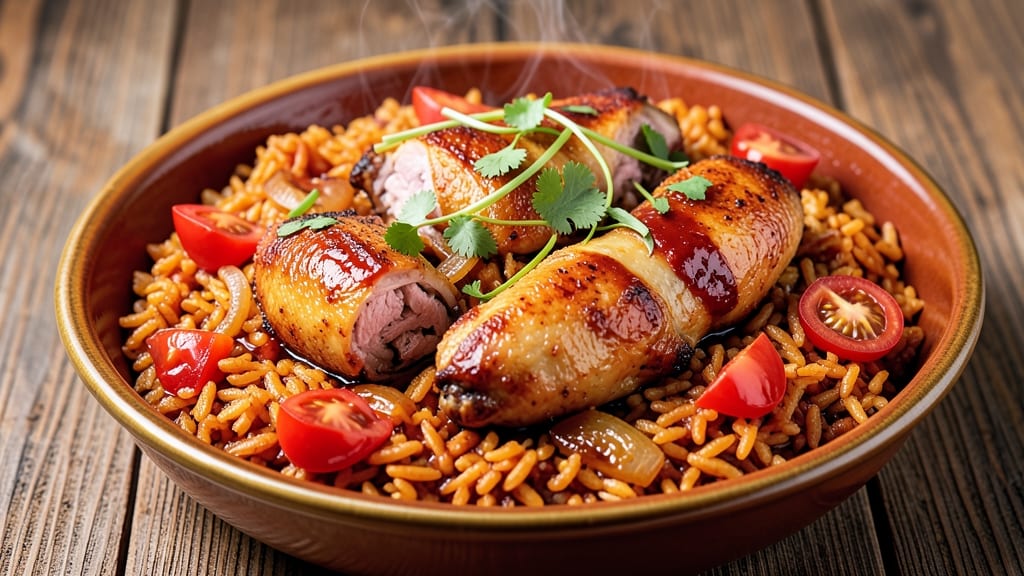
This African jollof rice and chicken recipe delivers the bold flavors and vibrant color of West Africa's most beloved one-pot dish. The secret lies in a rich tomato base simmered with aromatic spices, where chicken cooks alongside fragrant jollof rice until tender and infused with smoky, earthy depth.
I've perfected this version to balance the signature red hue with layers of flavor—spicy, savory, and slightly sweet—that make every bite unforgettable.
The beauty of this recipe is its simplicity: one pot, minimal prep, and a dish that feeds a crowd with minimal cleanup. Traditional ingredients like thyme, bay leaves, and chicken stock build the foundation, while modern shortcuts (like pre-made spice blends) keep it accessible.
The chicken marinates in a blend of garlic, ginger, and chili, ensuring it stays juicy while absorbing the complex flavors of the rice. This is the kind of meal that transforms a simple dinner into a celebration.
By the time you're done, you'll have perfectly tender chicken and rice with a crispy golden crust, all infused with the warm, spiced aroma that defines jollof. The dish holds its shape when served, making it ideal for sharing—whether at a family gathering or a casual weeknight dinner.
The balance of heat, acidity, and richness comes together in every forkful, proving that this one-pot wonder is worth the effort.
Ready to master the technique? This recipe includes tips for achieving the perfect color and texture, along with variations that highlight regional differences—like the slightly sweeter Nigerian style or the more tomato-forward Ghanaian approach. Let's get cooking!
Ingredients for african jollof rice and chicken
Sixteen ingredients, one pot, bold West African flavors that transform simple dinner into a celebration.
| Ingredient | Amount | Notes |
|---|---|---|
| Boneless Chicken Thighs 🍗 | 2 lb | Skin-on preferred for flavor |
| Long-Grain White Rice 🍚 | 2 cups | Uncooked, jasmine or basmati |
| Diced Tomatoes (Canned) 🍅 | 2 cans | 14.5 oz each, San Marzano preferred |
| Chicken Stock 💧 | 2 cups | Low-sodium preferred |
| Tomato Paste 🍅 | ½ cup | Squeeze tube or canned |
| Onion 🧅 | 1 whole | Yellow or red, diced |
| Garlic Cloves 🧄 | 6 cloves | Fresh, minced |
| Fresh Ginger 🌿 | 2 tbsp | Grated, or 1 tsp ground |
| Scotch Bonnet Peppers 🌶️ | 1 whole | Seeded, finely chopped |
| Dried Thyme 🌿 | 1 tbsp | Or 1 tbsp fresh thyme |
| Bay Leaves 🌿 | 2 whole | Fresh preferred |
| Ground Cumin 🌿 | 1 tbsp | Toasted for depth |
| Paprika 🌶️ | 1 tbsp | Smoked or sweet |
| Salt 🧂 | 1 ½ tsp | Diamond Crystal preferred |
| Black Pepper 🌶️ | ½ tsp | Freshly ground |
| Vegetable Oil 🫒 | 2 tbsp | For searing |
| Fresh Cilantro 🌿 | ¼ cup | Chopped, for garnish |
The tomatoes and chicken stock form the heart of this dish—San Marzano canned tomatoes deliver the sweetest, most vibrant flavor, but any good-quality brand works. For the chicken, thighs stay juicier than breasts, especially when cooked low and slow. Look for bone-in, skin-on thighs at your local butcher or grocery store's meat counter—they'll give you that extra depth of flavor. The ginger and Scotch bonnet peppers are non-negotiable for authentic heat; if you can't find Scotch bonnet, habanero or jalapeño will work in a pinch, but adjust the quantity based on your heat tolerance. Fresh thyme and bay leaves add that earthy complexity that defines jollof.
No Scotch bonnet? Substitute habanero or jalapeño, but start with half the amount and taste as you go—these peppers pack serious heat. Running low on chicken stock? Vegetable stock works equally well, though the flavor will be slightly different. The tomato paste can be skipped if you're using extra-thick diced tomatoes, but it helps deepen that signature red color. For the rice, jasmine or basmati are ideal—they hold up beautifully to the long cooking time without getting mushy. If you're using pre-made jollof spice blends, check the label for salt content to avoid over-salting the dish.
This dish tastes even better the next day as the flavors meld together. Store leftovers in an airtight container in the fridge for up to 4 days, or freeze portions for 3 months. The rice will firm up when reheated, so add a splash of water or stock when warming. For serving, I like to garnish with fresh cilantro and a drizzle of hot pepper oil—trust me, it takes this dish to the next level. Double the recipe if you're feeding a crowd; the one-pot method scales perfectly.
Why You'll Love This Recipe
- One-Pot Magic: I swear by this recipe because it’s actually one-pot—no rice burner, no separate chicken pan. Just brown the thighs, toss in the rice, tomatoes, and tomato paste, then let the stock do its thing. Minimal chopping, zero stress.
- Tomato Paste Secret: That thick, rich tomato paste is the MVP—it deepens the flavor without tasting like ketchup. Once it caramelizes, the sauce turns into this glossy, slightly sweet blanket over the rice and chicken. Trust me, you’ll go back for seconds.
- Crowd-Pleaser Always: Whether it’s a Sunday brunch, a potluck, or my kids’ school lunchbox, this dish always disappears. The chicken stays juicy, the rice is fluffy but not mushy, and honestly? Even picky eaters ask for more.
- Budget Meal That Lasts: Chicken thighs stretch further than breasts, and a can of tomatoes plus paste keeps costs low. Plus, leftovers reheat like a dream—better the next day, if you ask me. My freezer’s always stocked with portions for lazy nights.
Step-by-step instructions for African jollof rice and chicken
This one-pot masterpiece delivers bold flavors and a signature golden crust every time.
🍳 Step 1: Sear the Chicken for Deep Flavor
Heat a large, heavy-bottomed pot over medium-high heat and add the 2 tablespoons vegetable oil. Once shimmering, add the 2 lb boneless chicken thighs, skin-side down if skin-on, and cook for 6-8 minutes until golden brown on both sides. I press down gently on the thighs during the first minute to prevent curling and ensure even contact with the pan.
Remove the chicken and set aside. The rendered juices will form the base of your sauce, so don't wipe out the pot—those browned bits are pure flavor. If the chicken releases easily from the pan, it's ready. If it sticks, add a splash of water and scrape up those fond bits with a wooden spoon.
👨🍳 Step 2: Build the Spice Base
In the same pot, add the 1 whole diced onion and cook for 5 minutes until softened and translucent. Stir in the 6 minced garlic cloves, 2 tablespoons grated fresh ginger, and 1 finely chopped Scotch bonnet pepper, cooking for another 2 minutes until fragrant.
Add the 1 tablespoon ground cumin, 1 tablespoon paprika, 1.5 teaspoons salt, and 0.5 teaspoon black pepper, stirring constantly for 30 seconds to toast the spices and release their aromas. This step develops the complex flavor profile that defines jollof rice.
🥘 Step 3: Develop the Sauce
Pour in the 2 cans diced tomatoes and 0.5 cup tomato paste, stirring well to combine. Bring the mixture to a gentle simmer and cook uncovered for 10 minutes, stirring occasionally, until the tomatoes break down and the sauce thickens slightly. You'll notice the raw tomato acidity mellowing as it cooks down.
Return the chicken to the pot, add the 2 cups chicken stock, and bring to a boil. Reduce heat to low, cover, and simmer for 20 minutes, allowing the chicken to cook through and absorb the flavors. The chicken should be tender enough to pull apart with a fork when pierced.
🍚 Step 4: Layer and Cook the Rice
Remove the chicken from the pot and shred it, discarding any large bones. Stir the shredded chicken back into the sauce. Add the 2 cups long-grain white rice, 1 tablespoon dried thyme, and 2 bay leaves, mixing gently to distribute the rice evenly.
Bring the mixture to a boil, then reduce heat to low and cover tightly. Let it cook undisturbed for 20 minutes, then check the rice. If the liquid has been absorbed but the rice isn't fully tender, add 2-3 tablespoons hot water and cook another 5 minutes. The rice should be tender with a slight bite, not mushy.
⏰ Step 5: Create the Golden Crust and Rest
Increase heat to medium-high and uncover the pot. Let the top layer dry out and develop a golden crust for 5-7 minutes, stirring once or twice to ensure even browning. This crust is what gives jollof rice its signature texture and appearance.
Remove from heat, fluff the rice gently with a fork, and let it rest covered for 10 minutes. This resting period allows the rice to absorb any remaining liquid and develop its final texture. Garnish with 0.25 cup chopped fresh cilantro before serving, and enjoy immediately while the flavors are at their peak.
Pro Tips For Making African Jollof Rice And Chicken
- SEAR THE CHICKEN FIRST: Skip the "cook it all together" approach—get that pot smoking hot, then brown the chicken thighs in batches with a little oil. The crust locks in flavor and keeps them from turning rubbery later. I used to skip this, and the dish always tasted underwhelming until I tried it.
- BLANCH THE TOMATOES: Dump those canned diced tomatoes into a fine-mesh strainer, rinse them under cold water, then give them a quick 30-second blanch in boiling water. This removes excess pulp and water, so your sauce doesn’t turn into a watery mess. My grandmother called it "the lazy way to thicken sauce," but it works every time.
- STIR THE RICE AT THE WRONG TIME: Let the rice sit untouched for the first 10 minutes after adding the stock—just watch the liquid simmer gently. Then, only stir once, right before it’s fully cooked, to avoid breaking the grains. I learned this after making mushy rice three times in a row.
- USE TWO TOMATO PASTES: Split the tomato paste in half—cook one portion with the onions and peppers for depth, then mix the second into the sauce later for brightness. The first layer caramelizes into a rich base, while the second keeps the color vibrant. Sounds weird, but it works—trust me.
Best sauces and condiments for african jollof rice and chicken
Spicy Pepper Oil
Elevate your jollof rice with a drizzle of homemade hot pepper oil—just blend 1 tbsp Scotch bonnet peppers with ½ cup neutral oil (like vegetable or grapeseed) and let it infuse for 1 hour.
Strain and drizzle 1 tsp over each serving just before eating. The oil carries heat beautifully while adding a silky texture that contrasts the rice's firmness. 🌶️
Yogurt Sauce
Balance the richness of jollof with a cooling yogurt sauce made from ½ cup plain yogurt, 1 tbsp lemon juice, ½ tsp salt, and a pinch of cayenne pepper.
Whisk until smooth and serve on the side for dipping. This tangy contrast cuts through the dish's bold flavors while keeping it light. I love this with the slightly sweeter Nigerian-style jollof.
Fresh Pomegranate Molasses
Add a fruity depth to your Ghanaian-style jollof by drizzling 1 tsp pomegranate molasses—it’s like a sweet-tart glaze that brightens every bite. Look for it in Middle Eastern or African grocery stores, or make your own by reducing pomegranate juice.
The molasses also pairs perfectly with the smoky paprika in the dish. 🍇
Spicy Tomato Relish
For a fresh, crunchy side, blend 1 cup diced tomatoes, ½ red onion, 1 jalapeño, 1 tbsp olive oil, and 1 tsp lime juice into a chunky relish.
The acidity and heat complement the jollof’s richness, while the texture adds a refreshing contrast. Serve it as a topping or alongside the rice.
Garlic Butter
Turn your jollof into a showstopper by serving it with garlic butter—melt 2 tbsp butter with 2 minced garlic cloves and a pinch of salt until fragrant.
Drizzle over the rice before serving or use it to moisten the chicken pieces. The buttery richness makes every bite feel indulgent. 🧈
Coconut Milk Reduction
For a creamy twist, simmer ½ cup coconut milk with 1 tbsp brown sugar and ½ tsp cinnamon until thickened. Drizzle over the rice just before serving to add a tropical sweetness that balances the spice. This works especially well with the more tomato-forward Ghanaian jollof style.
Nutrition facts
Frequently asked questions about African jollof rice and chicken
What's the difference between Nigerian and Ghanaian jollof rice?
Nigerian jollof tends to be slightly sweeter with more tomato paste, giving it a deeper red color. Ghanaian jollof uses less tomato paste and often includes peanuts or palm oil for a richer, nuttier flavor. The heat level also differs—Nigerian versions are often milder while Ghanaian ones embrace more spice.
Can I use chicken breasts instead of thighs?
Yes, but thighs stay juicier in this long cooking process. If using breasts, pound them to ½-inch thickness and cook them separately for 10 minutes before adding to the pot. They'll absorb the jollof flavors beautifully but may dry out faster. For best results, marinate them first in garlic, ginger, and a touch of chili.
Why does my jollof rice turn out dry or mushy?
Dry rice usually means too much heat or not enough liquid. For mushy rice, check your rice-to-liquid ratio (use 2:1 stock-to-rice) and avoid stirring while cooking. The golden crust forms when the top layer dries out—don't rush this step! If needed, add 2-3 tbsp hot water during cooking, but never cold water.
How do I make this recipe vegetarian?
Replace chicken with 1 lb firm tofu or chickpeas (for protein) and add 1 tbsp soy sauce to the marinade. Use vegetable stock instead of chicken stock, and boost umami with 1 tbsp miso paste in the sauce. The dish will still be hearty and flavorful! For extra richness, stir in ½ cup coconut milk at the end.
Can I prepare this ahead of time?
Jollof rice actually tastes better the next day as flavors meld. Cook it fully, then refrigerate in an airtight container for up to 4 days. Reheat gently with 2 tbsp water or stock per cup of rice, covered on low heat. For freezing, portion and freeze for up to 3 months—thaw overnight in the fridge before reheating.