
Main Courses
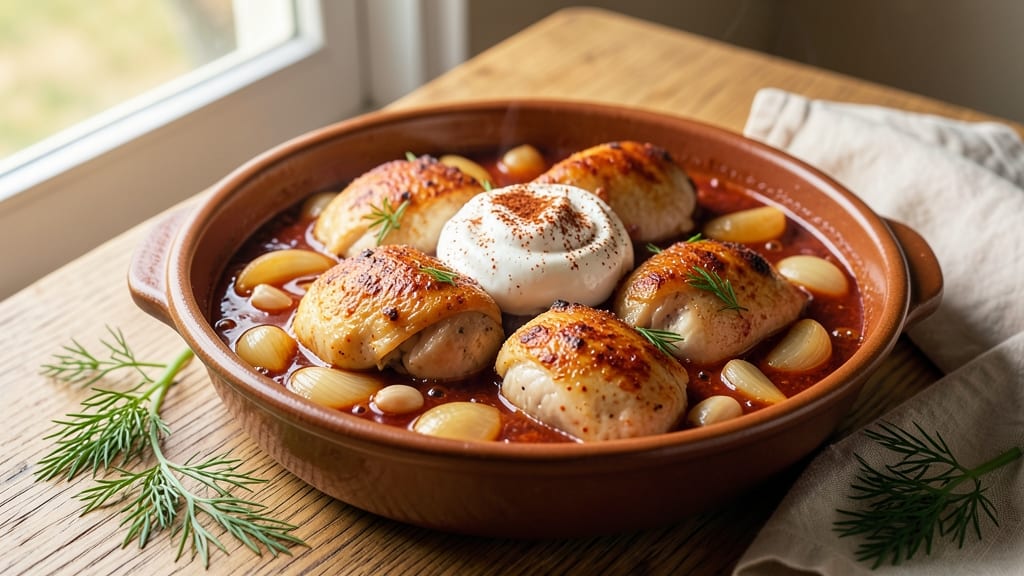
This authentic Hungarian chicken paprikash recipe brings the smoky, paprika-rich flavors of Budapest to your kitchen table, where slow-cooked chicken simmers in a velvety sauce until it practically melts in your mouth.
My grandmother's handwritten notes—written in Hungarian and translated by me—reveal the secrets behind its legendary depth: sweet paprika, sour cream, and patience. The key lies in the sauce's slow reduction, which develops layers of complexity that store-bought versions simply can't match.
The dish begins with chicken thighs, browned to a golden crust before simmering in a rich paprika-infused broth until tender. As the sauce thickens, it becomes velvety and aromatic, with just the right balance of sweetness and smokiness.
What truly sets this recipe apart is the finishing touch of sour cream, which cuts through the richness while adding a signature tang. This isn't just a meal—it's a taste of Hungary's culinary soul, made approachable for home cooks.
By the time you serve it, you'll have a dish that's rich, comforting, and undeniably authentic—with tender chicken swimming in a sauce that clings to every bite. The aroma alone will have everyone gathering at the table, while the flavors linger long after the last forkful.
Serve it with buttery egg noodles or crusty bread to soak up every last drop of that smoky, paprika-kissed magic.
This recipe delivers restaurant-quality results without requiring a professional kitchen. The slow-cooking process transforms simple ingredients into something extraordinary, proving that authenticity doesn't need to be complicated. Let's bring Hungary to your dinner table—one perfectly seasoned bite at a time.
Ingredients for authentic hungarian chicken paprikash
Sixteen ingredients transform into Hungary's most beloved dish—smoky, rich, and unforgettable.
| Ingredient | Amount | Notes |
|---|---|---|
| Chicken Thighs, Bone-In 🍗 | 2 ½ lb | Skin-on, trimmed of excess fat |
| Sweet Hungarian Paprika 🌶️ | ½ cup | High-quality, not smoked variety |
| Yellow Onion 🧅 | 1 whole | Medium size, finely chopped |
| Garlic Cloves 🧄 | 4 cloves | Fresh, minced for depth |
| Fresh Tomato Paste 🍅 | ¼ cup | No-sugar-added preferred |
| Sour Cream 🥛 | 1 cup | Full-fat for authentic texture |
| Chicken Broth 💧 | 2 cups | Low-sodium, homemade preferred |
| Extra-Virgin Olive Oil 🫒 | ¼ cup | For browning chicken |
| Fresh Parsley 🌿 | ¼ cup | Chopped, for finishing |
| Bay Leaves 🍃 | 2 whole | Fresh if available |
| Black Peppercorns 🌶️ | 1 tsp | Freshly cracked |
| Salt 🧂 | 1 ½ tsp | Diamond Crystal kosher |
| All-Purpose Flour 🌾 | 1 tbsp | For thickening sauce |
| Lemon Juice 🍋 | 1 tbsp | Freshly squeezed |
The sweet Hungarian paprika is non-negotiable here. Penzeys or local Hungarian markets carry the real deal—avoid the smoked varieties, which will overpower the delicate balance. I always buy mine in bulk from Whole Foods; the vibrant red color means it's fresh. For the chicken thighs, skin-on gives the best texture, but trim any thick fat deposits—those can make the sauce greasy. The chicken broth should be homemade if possible; store-bought brands often have too much sodium, which can mute the paprika's flavor. If you're using a jarred paste, San Marzano tomatoes make the best tomato paste—sweeter and more concentrated.
No sweet paprika? Dutch Moroccan paprika at half the amount works in a pinch, but it's not the same. Fresh parsley is ideal, but dried parsley at one-third the quantity gets you close. The sour cream needs to be full-fat—Trader Joe's or local dairy sections carry the best. Short on time? Substitute crème fraîche for a slightly tangier finish. The flour is just for thickening; if you're watching carbs, skip it and rely on the sauce's natural reduction. For the lemon juice, Meyer lemons add a floral note, but regular lemons work too—just squeeze extra for brightness.
This dish tastes even better the next day as the flavors meld. Store leftovers in an airtight container in the fridge for up to 5 days, or freeze for 3 months in portions. I like to reheat it gently on the stove with a splash of broth to restore that velvety texture. The sauce thickens as it cools, so add a bit more broth if it's too stiff when reheating. Serve with egg noodles or crusty bread—everyone will want seconds.
Why You'll Love This Recipe
- One-Pan Magic: I swear by this recipe because it’s all in one pot—no chopping boards, no extra pans, just chicken thighs browning in their own juices while the onions caramelize. The paprika turns that simple tomato paste into a thick, velvety sauce with almost no effort, and honestly? That’s my kind of cooking.
- Smoky-Sweet Obsession: Between us, the moment I add that sweet Hungarian paprika to the tomato paste and garlic? My kitchen smells like a Budapest café, and the sauce clings to the chicken like it’s been simmering for hours. It’s not just flavor—it’s experience in a bowl, and the crispy bone-in thighs make every bite worth it.
- Weeknight to Potluck: This dish works everywhere. Toss it with egg noodles for a 20-minute weeknight dinner, or bring it to a gathering where everyone else is stressing over complicated sides. My roommates used to joke that it was my "I don’t want to cook but still want to impress" move—and they weren’t wrong.
- Budget Hero: Bone-in chicken thighs stretch for miles, the paprika lasts forever, and onions/garlic are basically pennies. I make this twice a month, and the leftovers? Even better the next day—thicker sauce, deeper flavor, and zero waste. It’s the kind of meal that makes grocery bills feel less scary.
Step-by-step instructions for authentic Hungarian chicken paprikash
Here's how to create the classic Hungarian comfort dish with rich paprika depth and velvety sour cream.
Sear the Chicken Thighs for Deep Flavor
Pat the 2.5 lb chicken thighs, bone-in completely dry with paper towels—this ensures maximum browning. Heat the 0.25 cup extra-virgin olive oil in a heavy Dutch oven over medium-high heat until shimmering. Working in batches if needed, add the chicken thighs skin-side down and cook undisturbed for 5-6 minutes until the skin is golden brown and crispy.
Flip the thighs and cook for another 4-5 minutes until the meat reaches 165°F internally. Remove the chicken and set aside on a plate, leaving all the rendered fat in the pot. This fat is the foundation of your sauce's rich flavor. The skin should be deep golden with some caramelization—this is your first indicator of the authentic taste to come.
Build the Paprika Base with Onion and Tomato
In the same Dutch oven, reduce heat to medium and add the 1 whole yellow onion, chopped into small pieces. Cook for 5-6 minutes until softened and translucent, stirring occasionally. Add the 4 cloves garlic cloves, minced, and cook for 30 seconds until fragrant—don't let it brown or it'll turn bitter.
Stir in the 0.5 cup sweet Hungarian paprika and cook for 1 minute, allowing the spices to bloom and release their aromatic oils. Add the 0.25 cup fresh tomato paste and cook for another 2 minutes, stirring constantly. This creates a thick, flavorful base that will carry through your entire dish. The mixture should be deeply colored and slightly sticky at this stage.
Deglaze and Simmer the Sauce
Pour in the 2 cups chicken broth, scraping up any browned bits from the bottom of the pot with a wooden spoon. Add the 2 whole bay leaves and 1 tsp black peppercorns. Return the chicken thighs to the pot, skin-side up, and bring to a gentle simmer. Cover and cook for 30 minutes on low heat, allowing the chicken to absorb the paprika-infused broth.
After 30 minutes, carefully flip the chicken thighs and continue simmering uncovered for another 15-20 minutes until the sauce has reduced slightly and the chicken is tender. The sauce should coat the back of a spoon but still be slightly loose. This slow cooking develops the deep, complex flavors that define authentic Hungarian cuisine.
Finish with Sour Cream and Lemon
Reduce heat to low and stir in the 1 cup sour cream, mixing gently to temper it against the hot liquid. Add the 1 tbsp all-purpose flour and stir for 1-2 minutes until the sauce thickens slightly. Finish with the 1 tbsp lemon juice, which brightens the rich flavors and balances the dish.
Remove the chicken thighs and let them rest for 5 minutes before slicing. Skim any excess fat from the sauce if desired, then return the chicken to the pot and heat through for 2 minutes. Garnish with 0.25 cup fresh parsley, chopped, and serve immediately with egg noodles or crusty bread to soak up every last bit of that velvety paprikash sauce.
Pro Tips For Making Authentic Hungarian Chicken Paprikash
- Brown the Chicken Properly: Don’t just sear—get those thighs deep golden, not just pink. I used to rush this, and the paprikash ended up tasting more like stew than the rich, caramelized base it should be. Work in batches if needed, and let the fat render slowly for 8-10 minutes per side.
- Bloom the Paprika: Toss in the paprika before adding liquid—let it toast in the chicken fat for 30 seconds. This unlocks its smoky depth, not just its sweetness. I learned this the hard way after a batch tasted flat; the difference is night and day.
- Deglaze with Sour Cream Last: Save a splash of sour cream for the very end—adding it too early will thin the sauce and kill the paprika’s flavor. Stir in just enough to temper the heat, then let it sit off the heat for 2 minutes to thicken properly.
- Use Tomato Paste Early: Mix the tomato paste into the onions before adding paprika—this prevents a metallic aftertaste and deepens the sauce’s complexity. A tablespoon does the trick; skip this, and you’ll notice the paprika’s flavor feels one-dimensional.
Perfect pairings for this dish
Bread Pairings
Hungarian cuisine pairs beautifully with crusty, freshly baked bread. I love serving paprikash with freshly baked pita or crusty sourdough from my local bakery. The bread soaks up the rich sauce perfectly, and the slight tang of sourdough cuts through the creaminess.
For an extra special touch, toast the bread lightly before serving—it adds a satisfying crunch that balances the dish's velvety texture. 🥖
Nokedli or Egg Noodles
Traditional Hungarian egg noodles, called nokedli, are the classic pairing for paprikash. These small, egg-enriched dumplings melt in your mouth and absorb the sauce beautifully.
If you can't find nokedli, substitute with fresh egg noodles from the grocery store—just cook them al dente so they don't turn mushy in the sauce. I often make a big batch of nokedli ahead of time and freeze them for quick weeknight meals.
Pickled Vegetables
Hungarian cuisine loves pickled vegetables, and they add a bright, tangy contrast to paprikash. I keep a jar of pickled cucumbers or sauerkraut on hand for this dish. The acidity cuts through the richness of the sauce, and the crunch adds a refreshing texture.
You can find these at any farmers market or make your own using simple pickling brine. A few spoonfuls on the side elevate the whole meal. 🥒
Sour Cream Finishing
While the recipe already includes sour cream, I always serve an extra dollop on the side for guests to add to their plates. This lets everyone control the creaminess to their preference.
For an extra touch, I sometimes mix a spoonful of sour cream with a pinch of smoked paprika and serve it as a dipping sauce. This adds another layer of smoky flavor that ties everything together beautifully.
Hungarian Wine Pairings
A crisp Hungarian white wine, like Egri Bikavér (a red blend) or Furmint, complements paprikash perfectly. The wine's acidity balances the dish's richness, while its earthy notes enhance the paprika flavors.
If you prefer white, a Sauvignon Blanc from Hungary's Tokaj region works beautifully too. For a non-alcoholic option, try a sparkling Hungarian apple juice—it's refreshing and pairs surprisingly well. 🍷
Sweet Finish
Hungarians often end meals with something sweet, and this dish is no exception. I like to serve it with a simple apple compote or a slice of Hungarian sweet cheesecake (kurta). The sweetness cleanses the palate after the rich, savory paprikash.
For a quicker option, a scoop of vanilla ice cream or a drizzle of honey works wonderfully. This step is optional but adds that perfect Hungarian touch to your meal. 🍏
Nutrition facts
Frequently asked questions
Why does authentic Hungarian paprikash use sweet paprika instead of smoked?
The sweet variety creates a velvety, aromatic base that's essential for the dish's signature depth. Smoked paprika would overpower the delicate balance of flavors with harsh, bitter notes. For authenticity, always use sweet Hungarian paprika—it's the heart of this recipe!
Can I make this recipe with chicken breasts instead of thighs?
Chicken breasts will work, but thighs are traditional for their richer flavor and juiciness. If using breasts, cut them into even pieces and reduce cooking time to 20-25 minutes total to avoid drying out. The skin-on thighs render fat that enhances the sauce—breasts won't provide that same depth.
How do I fix a paprikash sauce that's too thin or too thick?
For a thin sauce, simmer uncovered for 5-10 minutes to reduce it. If too thick, whisk in 1-2 tablespoons warm broth or water to loosen. The sauce should coat the back of a spoon but remain slightly loose. Pro tip: Skim excess fat before adjusting thickness.
What's the best way to reheat leftovers without ruining the texture?
Gently reheat on the stovetop over low heat with a splash of broth or water. Never microwave—it breaks the sauce's velvety consistency. Cover the pot and heat just until warmed through (3-4 minutes). Leftovers taste even better the next day!
Can I substitute sour cream with something else?
Yes! Use crème fraîche (1:1 ratio) for a slightly tangier finish, or Greek yogurt (thinned with a splash of broth) for a lighter option. Avoid regular yogurt—it curdles in hot sauces. For a vegan version, blend cashew cream with a pinch of lemon juice.