
Main Courses
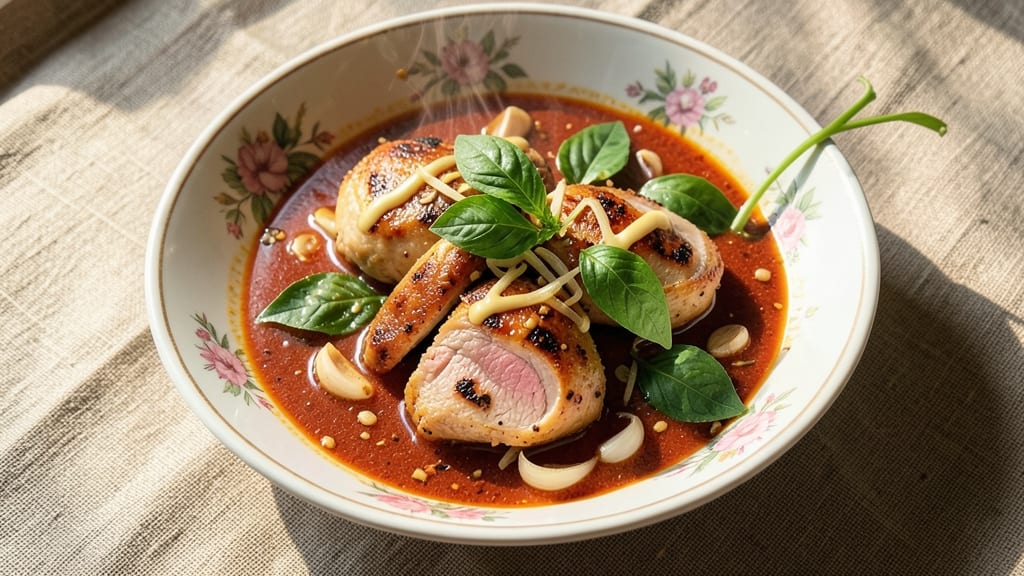
This authentic Thai chicken red curry recipe delivers the perfect balance of spicy, sweet, and creamy flavors that define Thailand’s most beloved dish. 🌟 The secret lies in properly blooming the curry paste—letting its aromatic spices sing before adding coconut milk creates depth that jarred pastes can’t match.
I’ve perfected this version over years of testing, ensuring the heat is balanced without overwhelming the tender chicken and rich coconut base.
The magic happens in layers: first, the paste releases its complex flavors in hot oil, then the chicken sears just enough to lock in juices, and finally, the coconut milk melds everything into a velvety sauce.
What you’ll end up with is a restaurant-quality curry where the heat builds gradually, the coconut milk stays luscious, and every bite carries that authentic Thai harmony of sweet, sour, and spicy notes.
This recipe stays true to tradition while offering modern flexibility—serve it with jasmine rice for the classic experience or swap in coconut yogurt for a lighter twist.
The aromatics alone will transform your kitchen into a Thai street food stall, and the sauce’s balance means it’s approachable for first-timers while still impressing seasoned curry lovers.
Ready in about 45 minutes, this curry delivers restaurant-quality results with minimal fuss. The key is patience—letting flavors develop rather than rushing the process. Once you taste the difference between homemade and store-bought, you’ll never go back to the jarred version again.
Ingredients for authentic thai chicken red curry
Authentic Thai flavors start with these 13 simple yet powerful ingredients.
| Ingredient | Amount | Notes |
|---|---|---|
| Boneless Chicken Thighs 🍗 | 1 ½ lb | Cut into 1-inch pieces |
| Red Curry Paste 🌶️ | 3 tbsp | Authentic Thai brand preferred |
| Coconut Milk 🥥 | 1 can | Full-fat, 13.5 oz can |
| Fish Sauce 🍶 | 2 tbsp | Red Boat brand recommended |
| Thai Basil Leaves 🌿 | ¼ cup | Fresh, stems removed |
| Garlic Cloves 🧄 | 4 cloves | Minced for aroma |
| Shallots 🧅 | 2 whole | Peeled and thinly sliced |
| Lime Juice 🍋 | 2 tbsp | Freshly squeezed |
| Vegetable Oil 🫒 | 2 tbsp | For blooming paste |
| Brown Sugar 🍚 | 1 tbsp | For sweet balance |
| Salt 🧂 | ½ tsp | Adjust to taste |
| Jasmine Rice 🌾 | 1 ½ cups | Uncooked, for serving |
| Green Onions 🧅 | 3 whole | Sliced for garnish |
The curry paste is everything here—Maesri or Maesan are my go-tos, but any authentic brand works. Look for vibrant red color and no added preservatives. Red Boat fish sauce is worth the splurge for that umami depth, but the regular grocery store kind gets the job done. The coconut milk? Full-fat only—it stays luscious and doesn't separate like the light versions. I grab mine at Trader Joe's or the Asian market, where they keep it stocked and fresh. Chicken thighs hold up better than breasts in the long simmer—bone-in, skin-on if you can find it, but boneless works fine too.
No fish sauce? Soy sauce at half the amount works in a pinch, though it won't be quite as authentic. Short on basil? Cilantro or Thai holy basil can substitute, but the flavor will shift. The brown sugar can be swapped for palm sugar or coconut sugar—they caramelize differently but still work. For the shallots, no need to peel them perfectly—just trim the ends and slice through the skin. Lime juice? Fresh is non-negotiable—bottled won't cut it. And if you're worried about the heat level, start with 2 tbsp of paste instead of 3 and adjust to taste.
This curry tastes even better the next day as flavors meld—make extra and freeze portions for up to 3 months. Store leftovers in an airtight container with a splash of coconut milk on top to preserve freshness. The rice? Cook it in broth instead of water—adds another layer of flavor. Garnish with those green onions right before serving so they stay crisp. And trust me, the first bite is worth the wait—that's when you know you've nailed the balance.
Why You'll Love This Recipe
- Here’s what sold me: the red curry paste delivers that signature Thai warmth—ginger, lemongrass, chili—but the coconut milk cools it into something rich, not overpowering. The fish sauce ties it all together, salty and umami, while the Thai basil at the end? That’s the little detail that makes it taste like a street cart in Bangkok.
- One-Pot Magic: I swear by this recipe—just chicken, curry paste, coconut milk, and a splash of fish sauce. No chopping veggies into tiny pieces, no measuring cups cluttering the counter. The curry paste does all the work, and by the time I’m done stirring, the kitchen’s cleaner than when I started.
- Balanced Heat: Here’s what sold me: the red curry paste delivers that signature Thai warmth—ginger, lemongrass, chili—but the coconut milk cools it into something rich, not overpowering. The fish sauce ties it all together, salty and umami, while the Thai basil at the end? That’s the little detail that makes it taste like a street cart in Bangkok.
- Leftovers That Last: This curry actually improves the next day. The flavors meld deeper, the coconut milk thickens into a velvety sauce, and I’ve reheated it for lunch three times without getting tired of it. Bonus: it freezes like a dream, so I make a big batch and pull it out whenever I’m too tired to cook.
Step-by-step instructions for authentic Thai chicken red curry
Here's how to craft a restaurant-quality Thai red curry with perfect balance—creamy, aromatic, and never too spicy.
🍳 Step 1: Bloom the Curry Paste for Maximum Flavor
Heat the 2 tablespoons vegetable oil in a heavy-bottomed pot over medium heat. Add the 3 tablespoons red curry paste and stir constantly for 2-3 minutes until it deepens in color and releases its complex aromas. You'll smell garlic, lemongrass, and chili—this is where the magic happens.
Don't rush this step. The paste contains raw spices that need time to toast and bloom. If it starts to darken too quickly, reduce heat slightly. Once fragrant and slightly darkened, add the 2 whole shallots and 4 cloves garlic cloves, cooking for another 1 minute until softened but not browned. This aromatic base is the foundation of your curry.
🍳 Step 2: Build the Curry Base with Chicken and Coconut
Push the shallots and garlic to the sides of the pot and add the 1.5 lb boneless chicken thighs cut into 1-inch pieces. Sear for 3-4 minutes until lightly browned on all sides. This step ensures your chicken stays juicy while developing flavor. Remove the chicken and set aside temporarily.
Pour in the 1 can coconut milk (don't stir yet) and let it simmer gently for 3-4 minutes until it separates slightly. The creamier top layer will thicken your sauce beautifully. Add the 2 tablespoons fish sauce and 1 tablespoon brown sugar, stirring well. Here's where the sweet and salty balance comes together—taste and adjust if needed.
🥘 Step 3: Simmer the Curry to Perfection
Return the chicken to the pot and bring everything to a gentle simmer. Partially cover and cook for 15-20 minutes over low heat, stirring occasionally. The curry should thicken gradually, coating the chicken and developing rich, layered flavors. If it gets too thick, add 2-3 tablespoons water to maintain balance.
I know it seems like a long wait, but this slow cooking is what makes authentic Thai curry special. The chicken should be tender enough to flake slightly with a fork, and the sauce should cling beautifully without being gluey. Here's the thing—don't skip this step. Rushing leads to watery, flavorless curry.
👨🍳 Step 4: Finish with Fresh Herbs and Lime
Stir in the 0.25 cup Thai basil leaves and 2 tablespoons lime juice, then simmer for another 2 minutes. The basil adds that signature Thai aroma, while the lime brightens everything up. Taste and adjust seasoning—you might need a pinch more salt or a splash more lime juice to hit that perfect balance.
Here's where it gets fun—garnish with 3 whole green onions sliced diagonally. The fresh contrast against the rich, creamy curry is what makes this dish pop. Real talk: this is the moment that matters. The curry should be creamy but not heavy, aromatic but not overpowering, and perfectly balanced between sweet, spicy, and tangy.
⏰ Step 5: Serve with Jasmine Rice
While the curry simmers, cook the 1.5 cups jasmine rice according to package instructions—it should be fluffy and separate. Serve the curry immediately over the rice, spooning some of that gorgeous sauce over the top. The rice soaks up just enough to make each bite perfect.
Don't forget to serve with extra lime wedges and fresh basil on the side. This curry tastes even better the next day, but it's so good fresh you'll want to eat it all now. The creamy coconut milk will separate slightly when chilled—just stir it back together before reheating.
Pro Tips For Making Authentic Thai Chicken Red Curry
- Bloom the Paste First: Toss your red curry paste into the hot pan before adding oil—this releases its aromatics and prevents burning. I learned this the hard way after smelling my kitchen like a charred spice factory.
- Pat Dry the Thighs: Skip the soggy curry by patting chicken thighs thoroughly with paper towels before searing. Moisture in the meat steams instead of browning, and that golden crust makes all the difference.
- Simmer, Don’t Boil: Once coconut milk hits the pot, keep the heat low and let it bubble gently—violent boiling breaks the emulsion and turns your curry greasy. Sounds weird, but it works.
- Toast the Basil: Toss Thai basil leaves into the pan for 10 seconds at the end—just enough to wilt and release their flavor without burning. Fresh basil wilts fast; don’t walk away.
Troubleshooting perfect results
Curry Paste Too Spicy?
If your curry turns out too fiery, start by adding 1-2 tablespoons of coconut milk to dilute the heat. For a more dramatic fix, stir in 1 teaspoon of brown sugar or palm sugar—this helps balance the spice while adding sweetness.
I also like to add a splash of lime juice (about 1 tablespoon) to brighten the flavors and cut through the heat. Remember, you can always adjust the spice level at the end—don’t be afraid to taste as you go! 🌶️
Sauce Too Thin?
If your curry sauce is watery, don’t panic—simmering longer is usually the fix. Reduce heat to low and let it cook uncovered for an additional 5-10 minutes, stirring occasionally.
If it still doesn’t thicken, mix 1 tablespoon of cornstarch with 2 tablespoons of water and stir it into the sauce. Simmer for another 2 minutes—this will give it that perfect, velvety consistency without making it gluey. 🥥
Chicken Too Dry?
Overcooking chicken is a common mistake, but it’s easy to fix. If your chicken turns out dry, try this trick next time: Don’t overcrowd the pot when searing. Use a heavy-bottomed pot—I love my Lodge Dutch oven—and cook the chicken in batches if needed.
Also, after simmering, let the curry rest for 5 minutes before serving. This lets the juices redistribute, keeping the chicken moist and flavorful. 🍗
Fish Sauce Overpowering?
Fish sauce can be intense, especially if you’re not used to its umami punch. If yours tastes too strong, balance it with a bit more lime juice (about ½ teaspoon extra) or a pinch of sugar.
You can also dilute it slightly by adding 1-2 tablespoons of water to the sauce. For a milder flavor, reduce the fish sauce to 1 tablespoon next time—it’s still packed with flavor but less dominant. 🍶
Coconut Milk Separating?
This happens when coconut milk isn’t heated gently enough. To fix it, whisk the sauce vigorously or use an immersion blender to recombine the layers. For prevention, stir the coconut milk in gradually over low heat, letting it warm slowly.
If you’re reheating leftovers, add 1 tablespoon of water per cup of curry and simmer gently—this helps the milk re-emulsify. Stirring in a splash of lime juice can also help stabilize the texture. 🥥
Lacking Depth of Flavor?
If your curry tastes flat, it might need more aromatic development. Next time, bloom the curry paste longer—aim for 3-4 minutes until it’s deeply fragrant. Also, don’t skip the shallots and garlic—they’re key for building layers of flavor.
For an extra boost, add ½ teaspoon of shrimp paste (if you’re comfortable with it) or a pinch of white pepper to enhance the complexity. Taste as you go and adjust with fish sauce or lime juice to round out the flavors. 💡
Nutrition facts
Frequently asked questions
Can I substitute chicken thighs with chicken breast?
Chicken breast works but requires extra care to stay moist. Cut it into 1-inch pieces and don't overcook—simmer for only 10-12 minutes after adding to the curry. For best results, marinate the breast in 1 tablespoon fish sauce and 1 tablespoon lime juice for 30 minutes before cooking to prevent dryness.
How do I adjust the spice level for kids or sensitive eaters?
Start with 2 tablespoons of curry paste instead of 3 for a milder version. If needed, add 1 extra tablespoon of coconut milk and ½ teaspoon more brown sugar to balance flavors. For extra mildness, strain out some of the chili flakes from the paste before using. Always taste and adjust gradually!
What's the best way to reheat leftovers?
Gently reheat on the stovetop over low heat with 1-2 tablespoons of water or coconut milk to prevent separation. Never microwave directly—it breaks the sauce's creamy texture. For best results, warm for 3-4 minutes until steaming, then stir vigorously to recombine any separated layers.
Can I make this curry in an Instant Pot?
Yes! Sauté the curry paste with shallots and garlic in normal mode for 2 minutes, then add chicken and coconut milk. Cook on high pressure for 8 minutes, then quick-release. Finish with fresh basil and lime juice. The pressure method cooks faster but may need 1 extra tablespoon of coconut milk to maintain creaminess.
What are the key signs of authentic Thai red curry?
Look for these: creamy but not heavy sauce, balanced heat (not overwhelming), aromatic depth from properly bloomed paste, and bright acidity from lime. The chicken should be tender but not falling apart, and you should see visible layers of red and white in the sauce. The aroma should make your mouth water!