
Main Courses
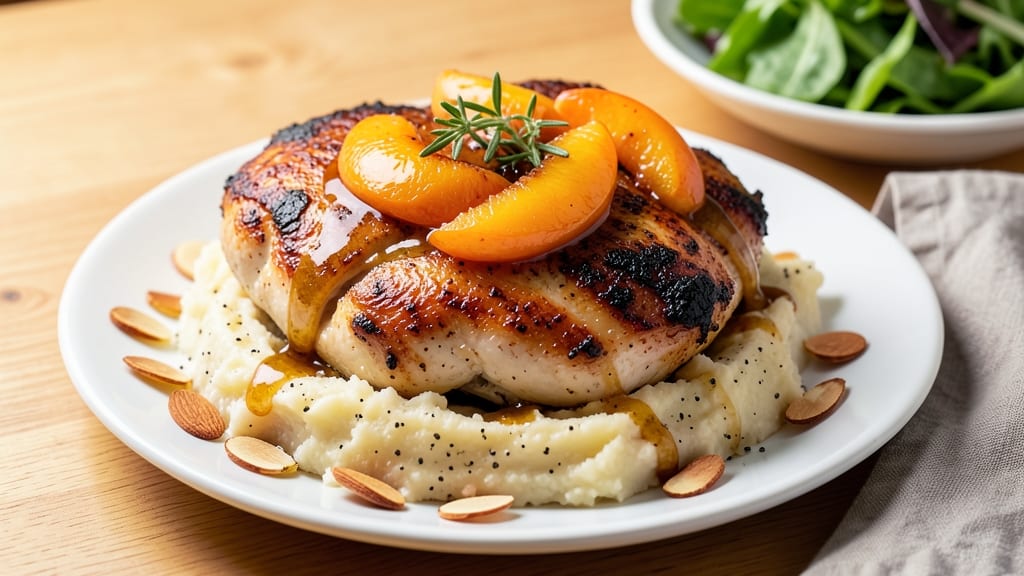
This baked chicken with canned peaches recipe transforms a simple weeknight meal into a sweet-tart masterpiece that balances rich, savory chicken with juicy, caramelized peaches.
The secret lies in a honey-mustard glaze that clings to the chicken while searing the edges to crisp perfection, then bursts with peach chunks that add natural sweetness and texture. I developed this dish after realizing how often canned peaches—often overlooked—can elevate savory dishes when used thoughtfully.
The process is straightforward yet impressive: marinate the chicken in a tangy blend of Dijon mustard and apple cider vinegar, then bake it topped with halved peaches until the glaze caramelizes into a sticky, golden crust.
The peaches soften slightly, releasing their juices that mingle with the glaze, creating a harmonious sweet-savory contrast. This method ensures the chicken stays moist while delivering a restaurant-worthy finish.
What you’ll end up with is juicy, golden-brown chicken crowned with peaches that glisten under the caramelized glaze, making every bite a balance of textures and flavors. The dish pairs beautifully with creamy mashed potatoes or a crisp arugula salad to cut through the richness.
It’s the kind of meal that feels special without requiring hours in the kitchen.
Perfect for summer gatherings or a cozy family dinner, this recipe proves that canned peaches aren’t just for desserts—they’re a game-changer in savory dishes. Here’s how to make it shine.
Ingredients for baked chicken with canned peaches
Sweet-tart balance starts with these 12 ingredients transforming simple chicken into a restaurant-worthy masterpiece.
| Ingredient | Amount | Notes |
|---|---|---|
| Boneless, Skinless Chicken Breasts 🍗 | 1 ½ lb | Pounded to even thickness |
| Canned Peaches in Juice 🍑 | 1 can | 15 oz can, halved |
| Dijon Mustard 🧄 | 2 tbsp | High-quality for tang |
| Apple Cider Vinegar 💧 | 2 tbsp | For marinade brightness |
| Honey 🍯 | 3 tbsp | Wildflower preferred |
| Olive Oil 🫒 | 2 tbsp | Extra-virgin for richness |
| Garlic Cloves 🧄 | 3 cloves | Minced for marinade |
| Salt 🧂 | 1 tsp | Diamond Crystal preferred |
| Black Pepper 🌶️ | ½ tsp | Freshly ground |
| Fresh Rosemary 🌿 | 1 tbsp | Chopped, for garnish |
| All-Purpose Flour 🌾 | 1 tbsp | For glaze thickening |
| Unsalted Butter 🧈 | 1 tbsp | Melted for finishing |
The peaches are the star—look for high-quality brands like Del Monte or Libby in juice, not syrup. The 15 oz can gives you perfect-sized halves for topping, and the juice adds natural sweetness without overpowering. Fresh rosemary from Whole Foods or your local market elevates the dish, but dried works in a pinch if you're short on time. For the chicken, organic free-range breasts stay juicier during baking, but conventional works fine too. Pound them to even thickness so they cook uniformly.
No Dijon mustard? Substitute with yellow mustard plus 1 tsp lemon juice for tang. Running out of apple cider vinegar? White vinegar or lemon juice at the same amount keeps the bright acidity. The honey can be swapped for maple syrup if you prefer, though wildflower honey adds subtle floral notes. For extra richness, add 1 tbsp brown sugar to the glaze. The canned peaches can be drained well or left juicy—just adjust the glaze thickness accordingly. If you're using peaches in syrup, reduce the honey by 1 tbsp to balance sweetness.
Marinate the chicken for up to 4 hours in the fridge for maximum flavor penetration. The peaches can be prepped ahead and stored in the marinade for 2 days before baking. Leftovers reheat beautifully—cover with foil and warm in a 350°F oven for 10-15 minutes. The glaze thickens as it cools, so add a splash of water if it becomes too stiff. Store in an airtight container for 3 days in the fridge or 3 months frozen, though it's best enjoyed fresh.
Why You'll Love This Recipe
- One-Pan Magic: I swear by this for lazy nights—just toss chicken, peaches, and that tangy honey-Dijon glaze on a sheet pan, and walk away. No chopping, no fuss, and honestly? The cleanup is just wiping one pan.
- Sweet-Tangy Obsession: That combo of peaches, apple cider vinegar, and Dijon? It’s like summer in a bite—bright, sticky, and just sweet enough to make you lick your plate. (Yes, even on a Tuesday night.)
- Lunchbox Hero: Pack this for work the next day—it reheats beautifully, and the peaches stay juicy. My kids actually eat their lunch when I send this, which is basically a parenting win.
- Pantry Stash Winner: Using canned peaches and chicken breasts? Budget-friendly without tasting cheap. I’ve made this for date nights, potlucks, and even a last-minute dinner when I forgot to grocery shop.
Step-by-step instructions for sweet-tart chicken with canned peaches
Transform simple ingredients into a restaurant-worthy dish with this precise baking technique.
Prepare the Chicken and Glaze Base
Preheat your oven to 375°F and position a rack in the center position. Place the 1.5 lb boneless, skinless chicken breasts between two sheets of plastic wrap and pound them to an even ½-inch thickness using a meat mallet. This ensures even cooking and prevents dryness in the center.
In a small bowl, whisk together the 2 tbsp Dijon mustard, 2 tbsp apple cider vinegar, 3 tbsp honey, 2 tbsp olive oil, 1 tsp salt, and 0.5 tsp black pepper until fully combined. This glaze will create the signature sweet-tart flavor profile while keeping the chicken moist during baking.
Marinate and Bake the Chicken
Place the pounded chicken breasts in a baking dish and pour the glaze mixture evenly over the top. Let them marinate for 15 minutes at room temperature while the oven preheats. This brief marination allows the flavors to penetrate the surface of the meat.
Transfer the baking dish to the preheated oven and bake for 20-25 minutes, or until the internal temperature reaches 165°F and the edges are lightly golden brown. The chicken should be fully cooked but still retain moisture. If the top begins to darken too quickly, tent loosely with aluminum foil to prevent over-browning.
Prepare the Peach Compote
While the chicken bakes, drain the canned peaches (reserve ¼ cup of the peach juice) and halve them. In a small saucepan, combine the peaches, reserved juice, 3 minced garlic cloves, and 1 tbsp chopped fresh rosemary. Bring to a simmer over medium heat and cook for 5-7 minutes until the peaches soften slightly and the mixture thickens into a compote.
Remove from heat and stir in the 1 tbsp all-purpose flour to slightly thicken the sauce. Keep warm until ready to serve. The peach compote should have a vibrant color and maintain its natural sweetness while complementing the savory chicken.
Finish and Serve
Remove the chicken from the oven and let it rest for 5 minutes before slicing. In a small saucepan, melt the 1 tbsp unsalted butter over low heat until just melted. Pour this butter over each chicken breast and let it sit for 1 minute to create a glossy finish.
To serve, spoon the peach compote alongside each slice of chicken. The contrast between the tender, slightly crispy chicken and the sweet-tart peach compote creates a perfect balance of flavors. Garnish with additional chopped rosemary for presentation and serve immediately while the chicken is warm and the peaches are still vibrant.
Pro Tips For Making Baked Chicken With Canned Peaches
- USE HIGH HEAT FIRST: I learned this the hard way—starting at 375°F (190°C) for the first 10 minutes sears the chicken before it gets buried under sauce. Once the edges turn golden, drop to 350°F (175°C) to finish baking. The contrast keeps the meat juicy instead of drying out under the peach glaze.
- DRAIN AND RINSE PEACHES: That syrupy canned peach juice is great for sauces, but not for clinging to chicken. Drain the peaches, then give them a quick rinse under cold water to cut excess sugar—it prevents a sticky, overly sweet glaze. Pat them dry afterward so they caramelize properly.
- SALT CHICKEN BEFORE MARINATING: I used to skip this, thinking the mustard-vinegar mix would handle it. Wrong. Season the chicken breasts generously with salt and pepper before brushing on the Dijon-honey glaze—it penetrates deeper and balances the sweetness. Trust me, the flavor difference is night and day.
- SAVE TIME WITH PEACH JUICE: Don’t toss that canned peach juice! Mix ¼ cup into the glaze (Dijon + honey + vinegar) for instant depth—it adds natural sweetness, acidity, and a subtle floral note. If you’re lazy (like me), just reduce it by half on the stove first to thicken it up before pouring over the chicken.
Wine and beer pairings for baked chicken with canned peaches
White Wine Pairings
A crisp Sauvignon Blanc from New Zealand or Loire Valley is my go-to choice for this dish—its bright citrus and herbal notes cut through the honeyed sweetness while complementing the peaches' natural acidity.
Look for wines with 12-13% ABV to balance the dish's richness without overwhelming it. I reach for Kim Crawford Sauvignon Blanc from Marlborough when I want that signature zesty punch. 🍷
Rosé Wine Options
For a lighter, more casual pairing, a dry Provence rosé with its delicate strawberry and citrus undertones enhances the peaches' sweetness without competing. A Château d'Esclans Whispering Angel (around 12.5% ABV) is my favorite—it's refreshing enough for summer but still elegant for dinner parties.
The subtle floral notes also harmonize beautifully with the rosemary in the dish.
Beer Pairings
A Belgian witbier like Hoegaarden or Stella Artois (the Belgian version) works surprisingly well with this sweet-savory combo. The coriander and citrus notes in these beers mirror the apple cider vinegar in the glaze, while their effervescence cleanses the palate between bites.
For a more robust option, try a German Helles Lager—its malty sweetness and crisp finish complement the caramelized edges of the chicken. 🍺
Non-Alcoholic Pairings
For a refreshing non-alcoholic option, I recommend sparkling peach iced tea—just mix ½ cup peach nectar, 2 cups brewed black tea, and 1 cup sparkling water with ice. The peach flavor echoes the dish while the tea's tannins balance the honey.
Alternatively, a ginger-mint lemonade (muddle 1 tbsp fresh ginger, 4 mint leaves, and 2 tbsp lemon juice with 2 cups water and 3 tbsp honey) adds a zesty contrast that's equally satisfying.
Seasonal Adjustments
In summer, I lean toward cool, crisp whites like Albariño from Spain, which has a floral aroma that pairs beautifully with the rosemary.
For fall and winter, a dry Riesling from Germany (around 11.5% ABV) adds a touch of spice that complements the honey and peaches without overpowering the dish. The slight sweetness in these Rieslings also enhances the caramelized glaze.
Nutrition facts
Frequently asked questions
Can I use fresh peaches instead of canned?
Fresh peaches work beautifully! Use ripe but firm ones, peeled and sliced into ½-inch thick pieces. Toss them in 1 tbsp lemon juice to prevent browning, then follow the same baking steps. Fresh peaches will release more juice, so reduce the honey in the glaze by 1 tbsp to balance sweetness.
How do I prevent the chicken from drying out?
Keep the chicken moist by brushing it with extra glaze halfway through baking (after 12-15 minutes). Also, pound the breasts to even ½-inch thickness and avoid overcooking—remove them when the internal temperature hits 165°F. Resting for 5 minutes before slicing helps retain juices too!
What's the best way to store leftovers?
Store in an airtight container for up to 3 days in the fridge. To reheat, cover with foil and warm at 350°F for 10-15 minutes. The glaze may thicken when cold—add a splash of water or peach juice to restore consistency. Freeze for 3 months by wrapping tightly in plastic.
Can I make this with chicken thighs instead?
Thighs stay juicier and add richer flavor. Use 4 bone-in, skin-on thighs (about 1.5 lbs) and bake at 375°F for 35-40 minutes until golden and internal temp reaches 175°F. Skip pounding, but pat dry first to help the glaze adhere better.
What if I don't have Dijon mustard?
No problem! Mix 2 tbsp yellow mustard with 1 tsp lemon juice for tang. For extra depth, add ½ tsp smoked paprika to the glaze. The flavor will be slightly milder but still delicious—just ensure you use enough acid (vinegar or lemon) to balance the sweetness.