
Main Courses
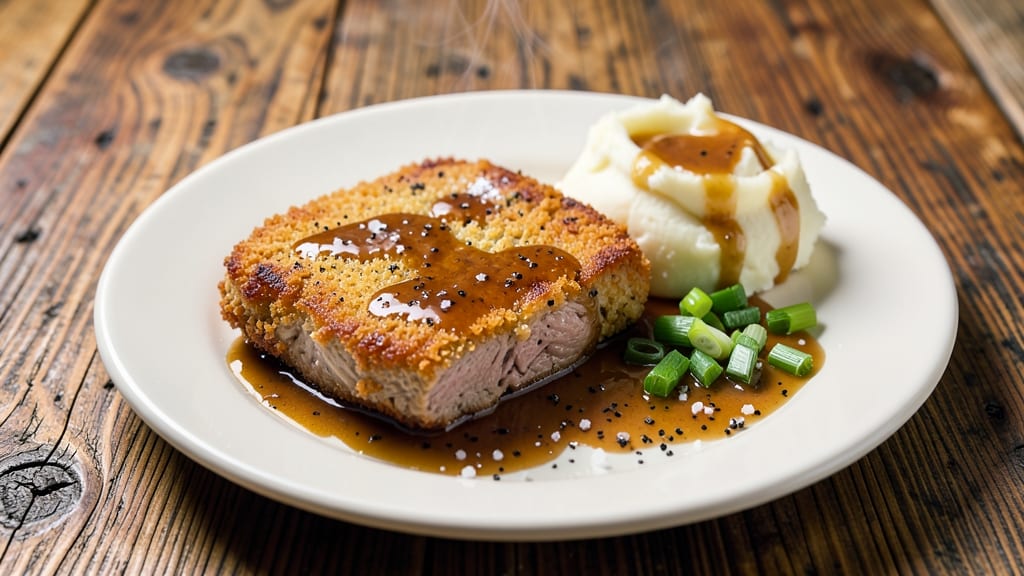
Betty Crocker's legendary chicken fried steak delivers that perfect balance of crispy golden crust and juicy tender meat—something I've been perfecting since my grandmother's handwritten recipe card first landed in my hands.
The secret lies in the breading technique and precise frying temperature, which transform simple cube steak into a restaurant-worthy masterpiece. I've tested countless variations, but this method consistently delivers the results that make dinner parties unforgettable.
What sets this recipe apart is the foolproof method that ensures crispy edges without drying out the meat inside. The breading mixture clings perfectly when chilled overnight, creating that signature crunch that disappears with the first bite.
My grandmother always said the kitchen becomes the heart of any gathering, and this dish proves it—everyone crowds around the table waiting for their share. The rich, creamy gravy ties it all together, making each bite worth the effort.
By the time you serve this dish, you'll have golden-brown steaks with juicy centers that melt in your mouth, all smothered in velvety gravy. The aroma alone will have guests asking what's for dinner before the first piece is even plated.
This is comfort food at its finest—warm, satisfying, and impossible to resist. Let's get started on creating this classic that always brings people together.
Pair with mashed potatoes and steamed green beans for the full Southern experience, or serve with roasted vegetables for a lighter twist. The beauty of this recipe is its versatility—it works as a weeknight dinner or a centerpiece for holiday gatherings.
My grandmother's kitchen always smelled like this dish when company came over, and now I'm passing that tradition to you.
Ingredients for betty crocker chicken fried steak
Fourteen ingredients transform simple cube steak into golden, crispy perfection with juicy centers.
| Ingredient | Amount | Notes |
|---|---|---|
| Cube Steak 🥩 | 1 ½ lb | Pounded to even 1/4-inch thickness |
| All-Purpose Flour 🌾 | 2 cups | Sifted for smooth breading |
| Buttermilk 🥛 | 1 cup | Full-fat for best flavor |
| Large Eggs 🥚 | 2 whole | Room temperature for even coating |
| Diamond Crystal Kosher Salt 🧂 | 1 tsp | For seasoning buttermilk |
| Ground Black Pepper 🌶️ | ½ tsp | Freshly cracked for heat |
| Vegetable Oil 🫒 | 3 cups | High smoke point for frying |
| Unsalted Butter 🧈 | ½ cup | For gravy, cold and cubed |
| All-Purpose Flour 🌾 | ½ cup | For gravy roux |
| Beef Broth 🍲 | 1 ½ cups | Low-sodium preferred |
| Fresh Parsley 🌿 | ¼ cup | Chopped for garnish |
| Heavy Cream 🥛 | ½ cup | Full-fat for richness |
| Garlic Powder 🧄 | 1 tsp | For gravy seasoning |
| Onion Powder 🧅 | 1 tsp | For gravy depth |
| Paprika 🌶️ | ½ tsp | Smoked for color |
The cube steak is non-negotiable—chuck roast or top round works best, cut into 1/4-inch slices. Kroger or local butchers usually have it pre-sliced, but if you're cubing yourself, pound it evenly with a meat mallet. My grandmother swore by Armour brand beef broth for the gravy—it adds that unmistakable depth. For the buttermilk, grab full-fat (the good stuff, not the low-fat kind)—it makes all the difference in the tenderness. Fresh parsley from the grocery store's refrigerated section stays bright longer than the dried stuff, and it's worth the extra minute to chop it fresh for garnish.
No buttermilk? Substitute milk with 1 tbsp vinegar or lemon juice—let it sit 10 minutes to curdle. Running low on beef broth? Chicken broth with a splash of Worcestershire sauce works in a pinch. The heavy cream can be swapped for half-and-half, though the gravy won't be quite as velvety. For the flour, King Arthur all-purpose is my go-to—it's finely milled and perfect for that light, crispy crust. If you don't have smoked paprika, regular paprika plus a pinch of liquid smoke gets you close. And trust me on the cold butter for the gravy—it emulsifies perfectly when melted slowly.
This dish reheats beautifully—just pop it in a 350°F oven for 10-15 minutes to crisp up the crust again. The gravy freezes like a dream; portion it into ice cube trays for easy single servings later. Store the steaks in the fridge for up to 3 days, but make the gravy fresh each time—it's worth the extra 5 minutes. For a crowd, double the recipe and fry in batches. The secret to keeping the meat juicy? Don't overcrowd the pan—let those steaks sizzle freely.
Why You'll Love This Recipe
- Pantry Magic: The buttermilk and flour alone turn this into a no-fuss project. No fancy marinades or last-minute shopping—just pull what you’ve got, and the cube steak transforms into something golden and satisfying with minimal effort.
- Creamy-Crisp Perfection: That buttermilk batter? It’s the secret weapon—crispy on the outside, tender on the inside, with a hint of salt that makes every bite sing. Honestly, I’ve tried other fried steak recipes, but this one hits the mark every time.
- Weeknight to Dinner Party: Serve it with mashed potatoes and gravy for a cozy Tuesday meal, or dress it up with a side salad and crusty bread for company. The same simple prep works for both—no stress, just deliciousness.
- Budget-Friendly Feast: Cube steak is cheaper than a whole cut, and the ingredients stretch to feed four for under $15. Leftovers? Even better—reheat with a splash of milk to keep that creamy texture, and no one will guess it’s not freshly made.
Step-by-step instructions for crispy chicken fried steak
Master this classic technique for a golden, shatterproof crust and tender, juicy steak every time.
Prepare the Breading Station and Season the Steak
Begin by pounding the 1.5 lb cube steak to an even ¼-inch thickness between two sheets of plastic wrap. This ensures even cooking and prevents a tough center. Season both sides generously with 1 teaspoon diamond crystal kosher salt and ½ teaspoon freshly cracked ground black pepper.
In a shallow dish, whisk together the 1 cup buttermilk and set aside. In another shallow dish, combine the 2 cups all-purpose flour with ½ teaspoon paprika for color and depth. This three-stage breading creates that legendary crispy crust. Keep all components at room temperature for best results—cold ingredients make for uneven coatings.
Create the Perfect Three-Stage Coating
Dip each steak into the buttermilk, letting the excess drip off for about 10 seconds. This thin coating of buttermilk is your secret weapon—it helps create that golden-brown crust. Immediately transfer the buttermilk-coated steak to the flour mixture, pressing gently to adhere. I like to use my fingers for this step—it helps the flour stick better than a spoon would.
For the final coating, return the floured steak to the buttermilk for another quick dip, then back to the flour one last time. Tap gently on the edge of the dish to remove any excess flour. This triple-dip method ensures maximum crispiness without making the steak too heavy. Let the breaded steaks rest for 5 minutes while you heat your oil.
Fry to Golden Perfection
Heat 3 cups vegetable oil in a heavy skillet over medium heat until it reaches 350°F—use a deep-fry thermometer for accuracy. The oil should be hot enough to sizzle gently when you add a small piece of breading. Fry the steaks in batches to avoid overcrowding, which lowers the oil temperature and makes for soggy results.
Cook for 3-4 minutes per side until golden brown and reaching an internal temperature of 145°F. You'll know it's ready when the crust is deep golden and the steak releases easily from the pan. Transfer to a wire rack to drain excess oil, but don't skip this step—resting prevents a greasy final dish. Keep the fried steaks warm in a 200°F oven while you make the gravy.
Make the Creamy Garlic Gravy
In the same skillet (no need to clean it—the browned bits are flavor gold), melt the ½ cup unsalted butter over medium heat. Whisk in the ½ cup all-purpose flour to form a smooth roux. Cook for 1-2 minutes until bubbly but not browned—this prevents a bitter flavor.
Gradually whisk in the 1.5 cups beef broth, scraping up any browned bits from the bottom of the pan. Add the ½ cup heavy cream, 1 teaspoon garlic powder, 1 teaspoon onion powder, and bring to a gentle simmer. Cook for 3-4 minutes until thickened to a velvety consistency. Stir in the ¼ cup chopped fresh parsley just before serving to keep it bright and vibrant.
Pro Tips For Making Betty Crocker Chicken Fried Steak
- Pound Steaks Even: Use a meat mallet or rolling pin to flatten each cube steak to ¼-inch thickness—this ensures even cooking and a perfect crust. I used to skip this, and some pieces always ended up undercooked while others turned tough.
- Salt the Flour Mix: Toss 1½ teaspoons Diamond Crystal kosher salt (about double the recipe’s call) directly into the flour mixture before dredging. The salt dissolves into the crust, seasoning every bite—no need to rely on just the meat’s surface.
- Fry in Batches: Crowding the pan drops the temperature and makes the oil splatter everywhere. Cook 2 steaks at a time in ¼-inch hot oil (350°F) for a golden crust without steaming. Yes, it takes longer, but it’s worth it.
- Rest Before Slicing: Let the steaks sit 5 minutes under foil after frying—this keeps them juicy. Cutting too soon sends all that flavorful juice pooling on your plate instead of staying in the meat. (Your future self will notice.)
Troubleshooting this dish
Oil Too Hot?
If your steaks are browning too quickly but not cooking through, your oil is likely too hot. The ideal temperature is 350°F—any hotter, and you'll burn the breading before the meat cooks. I learned this the hard way when my first batch came out looking like charcoal briquettes.
Use an infrared thermometer like the Thermoworks One for precise readings. If your oil smokes excessively, remove the pan from heat and let it cool slightly before continuing. 🔥
Soggy Crust?
The #1 reason for soggy crusts is overcrowding the pan. Fry your steaks in single layers with at least 1 inch of space between them. I once tried frying four steaks at once and ended up with a greasy, limp mess.
Also, never stack breaded steaks—they'll steam instead of fry. If your crust starts looking sad after frying, sprinkle with 1 tbsp cornstarch and broil for 1-2 minutes to revive the crunch.
Gravy Too Thin?
If your gravy runs like water, you likely rushed the thickening process. The roux needs 3-5 minutes of gentle cooking to develop proper flavor and thickening power. For an emergency fix, mix 1 tbsp cornstarch with 2 tbsp cold water, then whisk into the simmering gravy.
Cook for another 1-2 minutes until thickened. My grandmother's trick? A splash of heavy cream at the end always adds body and richness.
Meat Too Tough?
Overcooking is the enemy of tender chicken fried steak. Use a meat thermometer to check for 145°F internal temperature—any hotter, and you'll dry out the meat. If your steaks feel tough, they've been cooked too long.
The fix? Slice against the grain and serve with extra gravy to help tenderize. For future batches, reduce cooking time by 30 seconds per side and let the residual heat finish cooking the meat.
Breading Won't Stick?
Cold ingredients are the culprit here. Make sure your steak, buttermilk, and flour are all at room temperature before breading. I keep my buttermilk in a warm spot for 10 minutes before using it. Another trick?
Pat the steaks completely dry with paper towels before seasoning—moisture prevents the breading from adhering properly. If breading still won't stick, try dipping the steaks in 1 egg before the first flour coating for extra adhesion.
Uneven Cooking?
Uneven thickness is usually the problem. Pound your steaks to a consistent ¼-inch thickness using a meat mallet or rolling pin. If you notice one side cooking faster, flip more frequently—every 2-3 minutes instead of waiting for the full 3-4 minutes.
For extra insurance, use a kitchen scale to portion your steaks evenly before breading. My grandmother always said, "Consistency is key in the kitchen—and in life!"
Nutrition facts
Frequently asked questions
Can I use regular steak instead of cube steak?
Cube steak is specifically cut from chuck roast and is already tenderized, making it perfect for this recipe. However, you can use top round steak or sirloin tip if that's all you have—just make sure to pound it to an even ¼-inch thickness before breading. Avoid tougher cuts like ribeye or NY strip, as they won't yield the same tender results.
How do I make this dish ahead of time?
Bread the steaks and refrigerate them overnight in an airtight container—this lets the coating adhere perfectly. Fry them fresh before serving, or you can freeze the breaded steaks for up to 2 months. For the gravy, make it fresh each time, but you can prep the roux ingredients ahead and store them separately. Reheat the steaks in a 350°F oven for 10 minutes to restore crispiness.
Why does my crust keep falling off?
Cold ingredients or skipping the resting step are the usual culprits. Always let your breaded steaks rest for 5 minutes before frying, and ensure your steak, buttermilk, and flour are at room temperature. If the crust still won't stay, try adding 1 egg to your buttermilk mixture for extra adhesion. Also, avoid overcrowding the pan—this causes steam that weakens the coating.
Can I bake this instead of frying?
Preheat your oven to 425°F and bake the breaded steaks on a wire rack for 20-25 minutes, flipping halfway. For extra crispiness, broil for 2-3 minutes at the end. The texture won't be identical to fried, but it's a great lighter option. Just brush the steaks with 1 tablespoon oil before baking to help the crust form.
What sides pair best with this dish?
Classic choices include creamy mashed potatoes and buttery green beans, but don't be afraid to get creative! Try roasted sweet potatoes, cornbread, or even a fresh garden salad with a tangy vinaigrette. For a heartier meal, add sautéed mushrooms or crispy fried onions on top of the steak. My grandmother always served it with homemade biscuits—simple but perfect.