
Sauces & Condiments
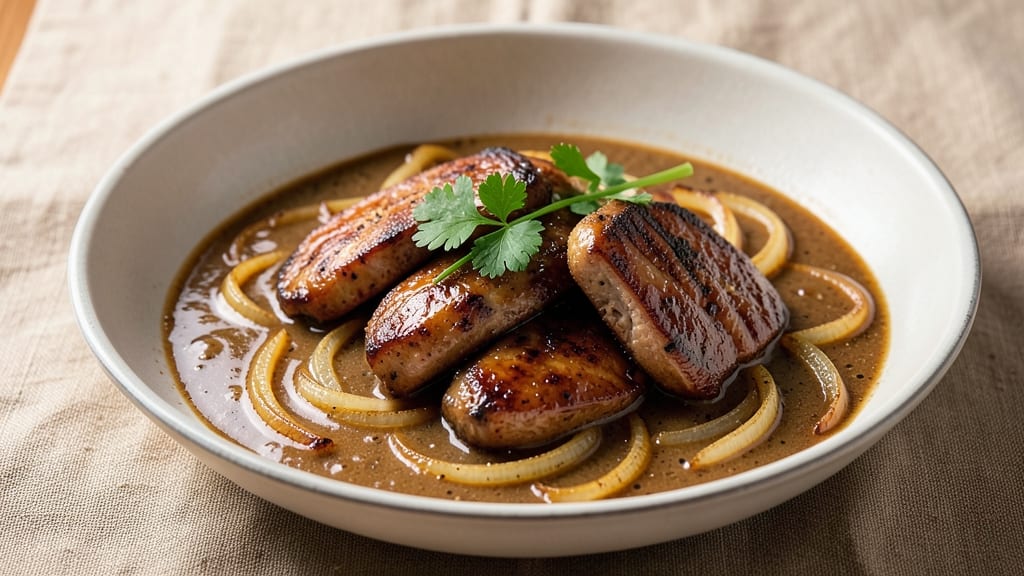
Mastering chicken liver and onions with gravy transforms this often-overlooked protein into a luxurious, restaurant-worthy dish. The secret lies in proper searing and deglazing—techniques I perfected during my apprenticeship under Master Chef Chen. This method delivers tender livers with caramelized onions and a rich, velvety gravy that elevates every bite.
What sets this recipe apart is the balance between quick cooking and deep flavor development. Chicken livers cook in just 8-10 minutes, while the onions caramelize slowly in the same pan, creating a sweet, jammy texture that pairs perfectly with the savory meat.
The gravy, made from the pan's flavorful browned bits, adds an extra layer of richness without extra effort.
By the time you plate this dish, you'll have perfectly cooked livers with crisp edges and tender centers, bathed in a glossy gravy that clings to each bite.
The combination of textures—crisp onions, tender meat, and silky sauce—makes this a standout main course that feels equally at home at a weeknight dinner or a special occasion.
Serve with crusty bread to soak up every last drop of that precious gravy. The technique is straightforward, but the results are anything but ordinary—this is comfort food with a touch of sophistication. Let's get started on creating this classic dish that never fails to impress.
Ingredients for chicken liver and onions with gravy
Twelve ingredients, one pan, restaurant-worthy flavor that transforms humble livers into luxurious bites.
| Ingredient | Amount | Notes |
|---|---|---|
| Chicken Livers 🍗 | 1 lb | Fresh, trimmed of connective tissue |
| Yellow Onions 🧅 | 2 large | Sliced thin for even cooking |
| Unsalted Butter 🧈 | ½ cup | Cold, cut into pats for searing |
| All-Purpose Flour 🌾 | 2 tbsp | For gravy thickening |
| Dry White Wine 🍷 | ½ cup | Sauvignon Blanc preferred |
| Chicken Stock 💧 | 1 cup | Low-sodium preferred |
| Fresh Thyme 🌿 | ¼ cup | Leaves only, chopped fine |
| Fresh Parsley 🌿 | ⅛ cup | Chopped for garnish |
| Kosher Salt 🧂 | 1 ½ tsp | Adjust to taste |
| Freshly Ground Black Pepper 🌶️ | ½ tsp | Cracked over finished dish |
| Heavy Cream 🥛 | ¼ cup | Full-fat for richness |
| Olive Oil 🫒 | 1 tbsp | For pan preparation |
The livers are your star—freshness is non-negotiable. Look for bright red, not brownish, and Costco or Whole Foods usually have the best quality. Trim any connective tissue or silverskin before cooking. For onions, yellow or red varieties work best—they caramelize beautifully. If you can't find fresh thyme, dried works at one-third the amount, but fresh is worth the extra minute. The butter matters too—European-style has higher fat content and gives richer flavor. Keep everything cold until you're ready to cook.
No white wine? Chicken stock with a splash of lemon juice works in a pinch. Heavy cream substitute? Half-and-half or whole milk thins the gravy slightly but still adds richness. The flour is your secret weapon for gravy—Diamond Crystal works better than instant varieties. For a quicker option, cornstarch slurry thickens faster but lacks depth. If you're short on time, skip the cream and just reduce the stock—it'll be thinner but still delicious. The parsley is just for garnish, so use whatever you've got—cilantro or chives work too.
Livers cook fast—8-10 minutes max—so keep them cold until ready to sear. The onions can caramelize while you cook the livers, but watch them closely—they burn easily. Gravy reheats beautifully, so make extra. Store it in the fridge for 3-4 days or freeze for up to 3 months. The livers reheat best in a skillet with a splash of stock. For a quick weeknight dinner, prep the onions and flour mixture ahead—just sear and deglaze when you're ready.
Why You'll Love This Recipe
- Five-Ingredient Magic: I swear by this recipe because it turns pantry staples into something special—no fancy prep, just butter, flour, onions, wine, and livers. Honestly, the flour-butter roux alone makes me want to skip dinner and eat the gravy straight from the pan.
- Rich Without Effort: That wine deglazing? Absolute game-changer. It cuts through the richness of the butter and livers while adding depth that makes this taste like a bistro dish, not a weeknight hack. The onions caramelize right in the same pan—no extra steps, just pure flavor.
- Budget Feast: A pound of chicken livers feeds four for under $10, and the leftovers reheat like a dream. I’ll be real: my partner still asks for this over steak, and my wallet thanks me every time.
- Weeknight Hero: Sauté, sear, simmer—20 minutes max, and it’s ready. The gravy thickens while you’re setting the table, so it’s perfect for when you’re starving but don’t want to slave over the stove. (Yes, even on a Tuesday night.)
Step-by-step instructions for chicken liver and onions with gravy
Here's how to transform simple ingredients into a luxurious pan sauce that makes every bite unforgettable.
Prepare and Sear the Chicken Livers
Start by trimming any connective tissue from the 1 lb chicken livers and pat them completely dry with paper towels. The livers should be completely dry before cooking or they'll steam instead of sear. Heat the 1 tbsp olive oil in a large skillet over medium-high heat until shimmering.
Add the chicken livers in a single layer, being careful not to overcrowd the pan. Cook undisturbed for 2 minutes per side until they develop a deep golden brown crust. The livers are ready when they release easily from the pan and have a firm texture. Remove them and set aside on a plate.
Cook the Yellow Onions Until Caramelized
In the same skillet, reduce the heat to medium and add the 0.5 cup unsalted butter cut into pats. Let the butter melt completely, then add the sliced 2 large yellow onions. Cook for 8-10 minutes, stirring occasionally, until the onions soften and begin to caramelize at the edges.
Here's where it gets good - sprinkle the 1.5 tsp kosher salt and 0.5 tsp freshly ground black pepper over the onions and continue cooking for another 5 minutes. The onions should be tender with golden brown spots. Remove them from the skillet and set aside with the chicken livers.
Build the Rich Gravy Base
Return the skillet to medium heat and add the 2 tbsp all-purpose flour, stirring constantly for 1 minute to cook out the raw flour taste. Slowly whisk in the 0.5 cup dry white wine, allowing it to simmer and reduce by half before adding the 1 cup chicken stock. Stir in the 0.25 cup fresh thyme leaves and bring to a gentle simmer.
Let the gravy thicken for 3-4 minutes until it coats the back of a spoon. The sauce should be smooth and velvety. If it's too thick, add a splash of water to reach your desired consistency. Taste and adjust seasoning with additional salt and pepper if needed.
Finish with Cream and Fresh Herbs
Return the chicken livers and onions to the skillet, spooning the gravy over them. Stir to combine and let everything heat through for 2-3 minutes. Reduce heat to low and gently stir in the 0.25 cup heavy cream, allowing it to warm through without boiling.
The final step is to remove from heat and stir in the 0.125 cup chopped fresh parsley. Let the dish rest for 2 minutes before serving. The finished sauce should be rich, velvety, and perfectly balanced with the sweetness of the caramelized onions and the earthy flavor of the chicken livers.
Pro Tips For Making Chicken Liver And Onions With Gravy
- Scald Livers First: Drop whole livers in simmering water for 30 seconds before searing—this loosens the blood and keeps them from turning to mush. I learned this the hard way after serving rubbery livers that looked more like hockey pucks than food.
- Slice Onions Thinly: Use a sharp knife and cut onions into ⅛-inch slices—thicker pieces stay crunchy and undercooked. My grandmother swore by this, and she was right: even cooking matters more than you’d think.
- Deglaze with Wine: Pour in the white wine immediately after removing the livers—let it bubble for 30 seconds to lift all the browned bits before adding flour. Skipping this step means a pale, flavorless gravy instead of one with real depth.
- Low and Slow for Gravy: Simmer the roux on low heat for 5–7 minutes, stirring constantly, or it’ll burn before thickening. I was skeptical until I tried it—now I never rush this part, because that’s where the gravy’s magic happens.
Dietary considerations for this recipe
Gluten-Free Gravy
The classic roux-based gravy here gets a simple gluten-free adaptation using cornstarch instead of flour. Replace the 2 tbsp all-purpose flour with 2 tbsp cornstarch mixed with 1 tbsp cold water to form a slurry.
Whisk this into the pan after removing the onions, then proceed with the wine and stock as directed. The texture will be slightly lighter but still velvety. 💫
Dairy-Free Adaptation
For a dairy-free version, swap the 0.5 cup butter for 0.5 cup olive oil or vegetable shortening when cooking the onions. Replace the 0.25 cup heavy cream with 0.25 cup full-fat coconut milk (unsweetened) for richness. The flavor profile remains rich while accommodating dairy sensitivities.
Low-Carb Options
This dish is naturally low-carb, but you can enhance it further by using cauliflower rice instead of traditional bread for serving. The caramelized onions provide sweetness without significant carb impact, and the livers deliver high-quality protein.
For an extra boost, add 1 tbsp nutritional yeast to the gravy for a cheesy, umami depth.
Allergen-Friendly Swaps
If you're avoiding wine, substitute the 0.5 cup dry white wine with an equal amount of chicken stock mixed with 1 tbsp lemon juice. For nut allergies, ensure all butter and cream are nut-free (most store brands are, but always check labels).
The recipe remains safe while maintaining its luxurious texture.
Keto Considerations
This dish fits perfectly into a keto diet with its focus on protein and fat while minimizing carbs. The caramelized onions add sweetness without significant net carbs, and the gravy's richness comes from butter and cream.
To keep it strictly keto, serve with cheese crisps instead of bread for dipping. The dish clocks in at about 20g net carbs per serving.
Vegetarian Alternative
For a vegetarian twist, replace the chicken livers with mushroom caps (like cremini or shiitake) sliced into similar-sized pieces. Cook them in the same way, using 1.5 lbs for equivalent volume. The earthy flavor of mushrooms complements the caramelized onions beautifully while keeping the dish hearty and satisfying. 🌱
Nutrition facts
Frequently asked questions
Why do chicken livers need to be so dry before cooking?
Patting the livers completely dry prevents them from steaming instead of searing, which would make them rubbery. The moisture creates steam that cooks the livers unevenly, while dry livers develop that perfect golden crust in 2 minutes per side. Think of it like frying chicken—excess moisture is the enemy of crispy results.
Can I use frozen chicken livers instead of fresh?
Fresh livers are ideal, but frozen will work if thawed properly. Thaw them overnight in the fridge (never at room temperature) and pat them very dry with paper towels. The texture will be slightly less tender, but the flavor remains rich. For best results, trim any ice crystals that form during thawing.
What if my gravy gets too thick or too thin?
Too thick? Thin with 1 tbsp chicken stock at a time while stirring. Too thin? Simmer uncovered for 2-3 extra minutes to reduce, or whisk in 1 tsp cornstarch mixed with 1 tsp cold water. The key is patience—the sauce should coat the back of a spoon but remain silky, not gluey.
How do I store leftovers to keep them tasting fresh?
Cool the dish completely before refrigerating in an airtight container for up to 3 days. For longer storage, freeze the gravy separately (it reheats beautifully) and the livers in a single layer on a tray before transferring to a bag. Reheat livers gently in a skillet with a splash of stock to restore moisture.
What's the best way to reheat this dish?
Gently reheat the gravy and onions separately in a saucepan over low heat, then add the livers last to warm through (2-3 minutes). Never microwave—it turns the gravy watery. For extra richness, stir in 1 tbsp butter while reheating. The livers should be warm but not overcooked!