
Main Courses
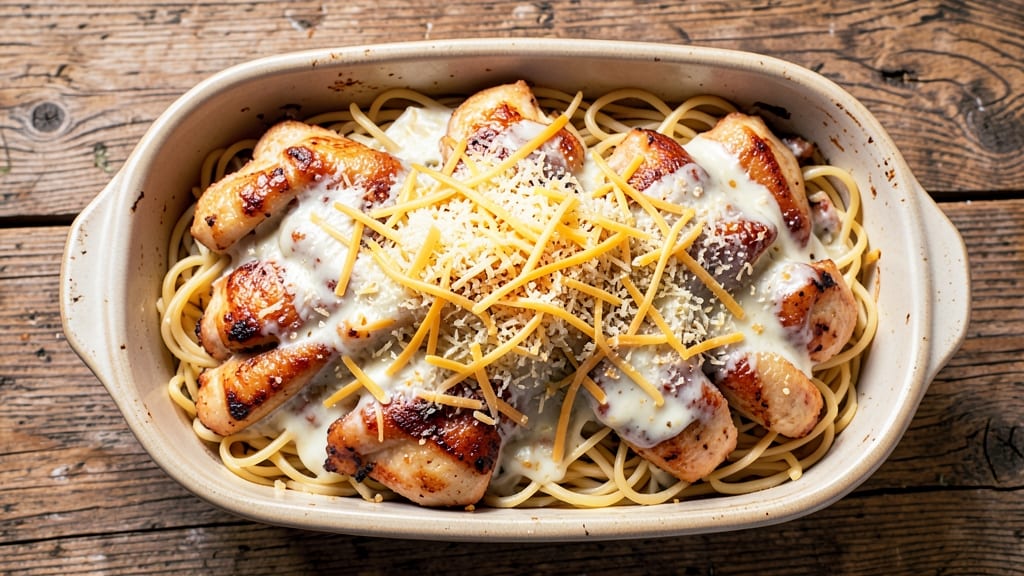
This Grandma’s Spaghetti Chicken Casserole recipe is the one that brings back Sunday dinners in my childhood kitchen—where crispy celery crowns topped golden cheese rivers and the aroma filled the house.
Growing up in small-town Georgia, this dish was the centerpiece of family gatherings, and I’ve spent years perfecting it to deliver that same nostalgic comfort without sacrificing restaurant-quality texture.
The secret lies in the crispy celery crowns—achieved by toasting the celery until caramelized before layering—and the melty cheese rivers that form when sharp cheddar and mozzarella blend just right.
This isn’t just a casserole; it’s a foolproof method that transforms simple ingredients into a dish worthy of a holiday table, ready in 45 minutes with minimal prep.
By the time it emerges from the oven, you’ll have a bubbling, golden masterpiece with tender chicken, perfectly cooked pasta, and a crispy top that holds up to every forkful.
The aroma alone will have your family asking why you don’t make this more often—and the first bite will remind them why it’s been a tradition for generations.
Serve with a simple green salad or crusty bread to soak up every last drop of that cheesy sauce. Here’s how to recreate the magic of Grandma’s kitchen in yours.
Ingredients for grandma's spaghetti chicken casserole
Grandma’s pantry staples meet Southern comfort in this golden casserole—where crispy celery crowns and melty cheese rivers create magic.
| Ingredient | Amount | Notes |
|---|---|---|
| Boneless, Skinless Chicken Thighs 🍗 | 2 lbs | Trimmed of excess fat for tenderness |
| Uncooked Spaghetti 🍝 | 1 lb | Medium or thin width preferred |
| Celery Stalks 🧅 | 3 whole | Fresh, cut into 1-inch pieces |
| Yellow Onion 🧅 | 1 whole | Medium, finely diced |
| Garlic Cloves 🧄 | 4 cloves | Fresh, minced for depth |
| Canned Cream of Chicken Soup 🥫 | 2 cans | High-quality, no artificial additives |
| Sharp Cheddar Cheese 🧀 | 2 cups | Freshly grated, sharp flavor |
| Mozzarella Cheese 🧀 | 1 ½ cups | Low-moisture, shredded fine |
| Unsalted Butter 🧈 | ½ cup | Cold, cubed for crispy celery |
| All-Purpose Flour 🌾 | ¼ cup | For thickening sauce |
| Whole Milk 🥛 | ½ cup | Full-fat for creaminess |
| Dried Oregano 🍃 | 1 tbsp | Italian variety preferred |
| Ground Black Pepper 🌶️ | ½ tsp | Freshly cracked for heat |
| Kosher Salt 🧂 | 1 ½ tsp | Diamond Crystal preferred |
| Fresh Parsley 🌿 | ¼ cup | Chopped, for garnish |
The celery is non-negotiable—fresh stalks with vibrant green tops, not the wilted kind. I grab mine from the produce section at Publix or Whole Foods, where they’re always crisp. For the cheese, sharp cheddar is key—none of that mild stuff. Kraft 2% sharp works in a pinch, but if you can find Cabot or Tillamook, your casserole will thank you. The chicken thighs? Bone-in, skin-on if you can find them—they stay juicier, but boneless works too. Just don’t skip trimming the fat; it burns before the celery gets crispy.
No cream of chicken soup? Homemade roux with chicken broth is the next best thing—just whisk 2 tbsp butter, 2 tbsp flour, and 1 cup broth until thickened, then stir in 1 cup milk. Short on mozzarella? Parmesan at half the amount adds depth, but the texture won’t be the same. The celery needs to be golden and caramelized—don’t rush this step. I usually toast mine in butter until it’s almost jammy, about 8-10 minutes. For the pasta, uncooked spaghetti is a must; it absorbs the sauce better than pre-cooked noodles. And if you’re out of dried oregano, fresh marjoram at double the amount works in a pinch.
This casserole reheats like a dream—350°F for 20 minutes covered with foil, then 5 minutes uncovered to crisp the top again. Leftovers keep for 4 days in the fridge, but honestly? It’s even better the next day when the flavors meld. For freezing, portion into individual servings before baking—just thaw overnight in the fridge and reheat. The parsley garnish is optional, but it adds that fresh pop that Grandma always included. Store it in an airtight container with a sprinkle of cheese on top to keep it from drying out.
Why You'll Love This Recipe
- One-Pot Magic: I swear by this recipe because it’s literally one bowl, one bake. Toss in the raw chicken thighs, uncooked spaghetti, and that celery-onion-garlic trio—no pre-boiling, no fuss. The spaghetti soaks up all the savory juices while the chicken gets tender, and honestly? I’ve never had a casserole this simple that still feels like a proper meal.
- Garlic Bomb: That minced garlic and onion combo? It’s the secret weapon. The chicken thighs stay juicy while the aromatics caramelize just enough to give every bite a deep, rich punch. Between us, I double the garlic if I’m feeling bold—no regrets, just pure satisfaction.
- Leftovers That Don’t Suck: This dish actually improves the second day. The flavors meld overnight, and reheating it? Just a quick microwave or oven zap. I make a double batch on Sundays because my kids beg for it at school lunches—yes, even the picky ones.
- Budget Meal for Crowds: Chicken thighs are cheaper than breasts, uncooked spaghetti stretches farther than pre-boiled, and the veggies bulk it up without breaking the bank. For under $15, I feed six people a meal that tastes like a restaurant dish. That’s not luck—that’s Grandma’s genius.
Step-by-step instructions for Grandma's spaghetti chicken casserole
Here's how to build layers of crispy celery crowns and melty cheese rivers—just like Grandma used to make.
Cook the Chicken and Prepare the Celery Crowns
In a large skillet, melt the 0.5 cup unsalted butter over medium-high heat. Add the 2 lbs boneless, skinless chicken thighs, seasoned with 1.5 tsp kosher salt and 0.5 tsp ground black pepper, and cook for 8-10 minutes per side until golden brown and cooked through. Remove the chicken from the skillet and set aside to rest.
In the same skillet, add the 3 whole celery stalks, cut into 1-inch pieces, and cook for 3-4 minutes until tender but still vibrant green. Remove the celery and set it aside with the chicken. This step ensures the celery stays crispy when baked later—don’t overcook it.
Build the Creamy Sauce Base
Lower the heat to medium and add the 0.25 cup all-purpose flour to the skillet, stirring to coat the bottom. Cook for 1-2 minutes until lightly golden, creating a roux that will thicken the sauce. Slowly pour in the 0.5 cup whole milk while whisking continuously to avoid lumps.
Stir in the 2 cans canned cream of chicken soup, 1 tbsp dried oregano, and 1.5 tsp kosher salt, bringing everything to a gentle simmer. Let the mixture cook for 3-4 minutes until it thickens slightly and coats the back of a spoon. This is the foundation of your creamy, flavorful sauce—don’t rush it.
Assemble the Casserole Layers
Preheat your oven to 375°F. In a large greased baking dish, spread the 1 lb uncooked spaghetti evenly across the bottom. Pour the creamy sauce mixture over the spaghetti, then layer the cooked chicken thighs and celery on top. Sprinkle 1 cup of the sharp cheddar cheese and 1 cup of the mozzarella cheese over the chicken.
Here’s the trick to crispy celery crowns: Arrange the remaining celery in a single layer on top of the cheese, pressing down lightly so they stay in place. This ensures they bake evenly and develop that golden, crispy texture. Top with the remaining 1 cup sharp cheddar cheese and 0.5 cup mozzarella cheese.
Bake to Golden Perfection
Cover the baking dish tightly with aluminum foil and bake for 30 minutes. Remove the foil and bake for an additional 10-15 minutes until the cheese is bubbly and the celery crowns are golden brown and crispy. The edges should look slightly caramelized, and the cheese should pull away from the sides of the dish.
Let the casserole rest for 5-10 minutes before serving. This resting time allows the layers to set and the flavors to meld together. Garnish with 0.25 cup fresh parsley just before serving to add a pop of color and freshness. Each bite should deliver tender chicken, creamy sauce, crispy celery, and melty cheese—just like Grandma’s.
Pro Tips For Making Grandma'S Spaghetti Chicken Casserole
- Sear the Chicken First: I learned this the hard way—raw chicken thighs in a casserole end up rubbery. Hit a skillet with 2 tablespoons of oil over medium-high heat, pat the thighs completely dry, and cook them 4-5 minutes per side until golden. The crust locks in flavor and keeps them juicy when they bake later.
- Pre-Cook the Spaghetti: Sounds weird, but it works: cook the spaghetti al dente (1 minute less than package says), drain, and rinse with cold water. Toss it with a bit of olive oil so it doesn’t clump. This prevents a gummy casserole—raw pasta absorbs too much liquid and turns mushy.
- Slice the Celery Thin: I used to chop celery in big chunks, and it just sat there like a crunchy afterthought. For this dish, slice it paper-thin (almost like matchsticks) so it softens evenly and blends into the sauce instead of turning to mush or staying raw.
- Layer Like a Pro: Dump everything in the pot and stir? Nope. Start with half the spaghetti, then chicken, then veggies, then sauce—repeat. The top layer should be sauce to seal in moisture. Cover with foil loosely (so steam escapes) for the first 20 minutes, then uncover to brown.
Pro cooking tips for this dish
Celery Crown Magic
That crispy celery topping is the secret weapon—don’t skip the 8-10 minute butter toast until it’s golden and caramelized. I use 3 whole celery stalks (about 1.5 cups chopped) because thicker pieces stay crispier longer.
Arrange them in a single layer on top of the cheese, pressing lightly so they don’t float away during baking. 🌟
Sauce Thickening Trick
The sauce needs to coat the back of a spoon before assembly—this prevents a watery casserole. I make a simple roux with 0.5 cup butter and 0.25 cup flour, then whisk in the milk and soup.
Simmer for 3-4 minutes until it thickens to 105°F (use an instant-read thermometer). This step is non-negotiable for that perfect creamy texture.
Layer Order Matters
Spaghetti on the bottom absorbs sauce perfectly, but the chicken and celery must go in the middle layer. I always place the chicken thighs cut-side down so they stay moist. The cheese on top melts into rivers that coat every bite—don’t skimp on the 2.5 cups total cheese.
The sharp cheddar adds tang while the mozzarella creates that signature stretch.
Baking Temperature Control
Start at 375°F covered for 30 minutes to cook through, then uncover for 10-15 minutes at 375°F to get that golden crust. I use a 9x13-inch Pyrex dish because it conducts heat evenly.
The celery should be crispy enough to stand up to a fork—if it’s too soft, bake 5 more minutes uncovered.
Resting Prevents Disaster
Never serve this casserole straight from the oven—let it rest for 5-10 minutes first. This allows the cheese to set slightly and prevents a runny mess when cutting. I also recommend using a serrated knife to slice through the crispy top cleanly.
The first bite should have all four textures: tender chicken, creamy sauce, crispy celery, and melty cheese. 💛
Cheese Melting Hack
For extra gooey rivers, mix 1 tbsp milk into the shredded cheese before sprinkling on top. This creates steam that helps the cheese melt more evenly. I also like to add ½ tsp garlic powder to the cheese mixture for a subtle depth of flavor.
The result? Cheese that stretches like taffy and coats every forkful beautifully.
Nutrition facts
Frequently asked questions
Why does this recipe use uncooked spaghetti instead of pre-cooked noodles?
The uncooked spaghetti absorbs the creamy sauce perfectly during baking, creating a more cohesive texture. Pre-cooked noodles often release excess water, leading to a soggy casserole. This method ensures each bite has that ideal balance of tender pasta and rich sauce.
Can I substitute chicken breasts for thighs in this recipe?
While you can use chicken breasts, thighs stay juicier and more flavorful during baking. If substituting, cut them into even pieces and bake for 5-7 minutes less to prevent drying out. For best results, use bone-in thighs—they retain moisture better than boneless cuts.
How do I make this dish ahead of time for a family gathering?
Assemble the casserole up to 24 hours ahead and refrigerate uncovered. When ready to bake, add 10 minutes to the cooking time. For freezing, bake completely, cool, portion into individual servings, and freeze for up to 3 months. Thaw overnight in the fridge before reheating.
What's the best way to reheat leftovers without drying them out?
Cover leftovers with foil and reheat at 350°F for 20 minutes, then uncover for 5 minutes to restore crispiness. For microwave reheating, use 50% power for 2 minutes, then stir and add 1 tbsp milk or water to refresh the sauce. Always let it rest 5 minutes before serving.
Can I make this dish in a smaller baking dish?
Yes, but reduce the recipe by 30-40% for a 8x8-inch dish. Use the same layering technique, but bake for 5-7 minutes longer to ensure even cooking. The smaller surface area means more direct heat exposure. For best results, use a light-colored dish to prevent over-browning.