
Main Courses
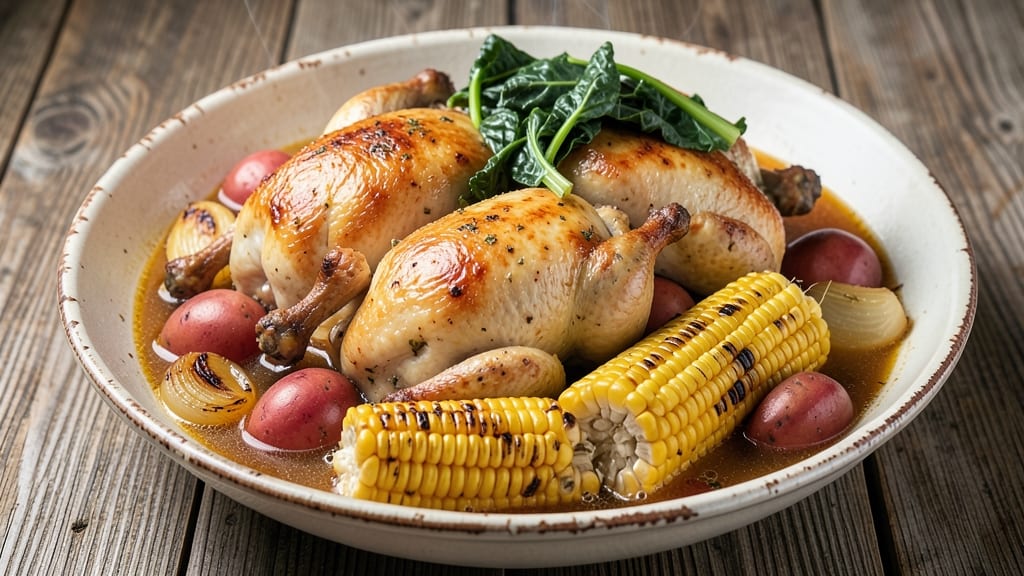
Mastering a non-seafood chicken boil recipe transforms a simple pot of water into a flavor-packed centerpiece that feeds a crowd with minimal fuss. Growing up in Georgia, I learned how a well-seasoned broth and tender chicken could turn an ordinary weeknight into a celebration—no seafood required.
The key lies in slow-simmered spices and the right vegetables to create a dish that’s hearty, comforting, and packed with Southern charm.
This method delivers restaurant-quality results with just a few essential ingredients: whole chickens, potatoes, corn, collards, and a blend of aromatic spices like garlic, onion powder, and bay leaves. The secret?
A long, gentle boil that infuses the broth with deep flavor while keeping the chicken juicy and the vegetables tender. Whether you’re using a traditional stockpot or an Instant Pot for speed, the technique remains the same—patient cooking yields maximum flavor.
By the time you’re done, you’ll have a steaming pot of golden broth, perfectly cooked chicken that falls off the bone, and vegetables that absorb the savory essence of the spices.
The aroma alone will draw everyone to the table, and the first bite delivers that perfect balance of tender meat, crisp-tender vegetables, and rich, seasoned broth. This is the kind of dish that turns a simple meal into a memorable feast.
Serve with crusty bread to soak up every drop of that flavorful broth, or pair it with a simple green salad for a complete meal. The leftovers reheat beautifully, making this an ideal recipe for meal prep or feeding a hungry crowd.
Let’s get started on creating your own crowd-pleasing chicken boil.
Ingredients for non seafood chicken boil
Six core ingredients transform simple broth into a Southern classic feast.
| Ingredient | Amount | Notes |
|---|---|---|
| Whole Chickens 🍗 | 3 whole | 3-4 lbs each, giblets removed |
| Yellow Onions 🧅 | 2 whole | Quartered, skins on for color |
| Garlic Cloves 🧄 | 8 cloves | Smashed, skins on for aroma |
| Russet Potatoes 🥔 | 3 lb | Cut into 2-inch chunks |
| Corn on the Cob 🌽 | 4 ears | Husk removed, cut in half lengthwise |
| Collard Greens 🥬 | 1 lb | Torn into bite-sized pieces |
| Bay Leaves 🌿 | 4 whole | Dried, standard size |
| Dried Thyme 🌿 | 1 tbsp | Or 1 tbsp fresh thyme leaves |
| Onion Powder 🧅 | 2 tsp | For depth of flavor |
| Salt 🧂 | 2 tbsp | Kosher or sea salt |
| Black Peppercorns 🌶️ | 1 tbsp | Cracked for even distribution |
| Hot Sauce 🌶️ | 2 tbsp | Optional, for heat preference |
| Crusty Bread 🍞 | 1 loaf | For serving and broth soaking |
The chickens are the foundation—look for 3-4 lb birds with good fat coverage for juiciness. Local butchers or Costco often have the best quality at reasonable prices. If using frozen, thaw overnight in the fridge. The potatoes should be Russet or Yukon Gold—their waxy texture holds up perfectly to boiling. For collards, heirloom varieties have the best flavor, but any green collards will work. The corn should be freshly shucked—frozen works in a pinch but lacks that sweet, juicy bite.
No yellow onions? Red or white onions work fine, though they'll give a slightly different color to the broth. Short on bay leaves? Dried thyme plus a pinch of allspice mimics that aromatic depth. The hot sauce can be swapped for red pepper flakes or cayenne, but adjust carefully—start with half the amount. For a vegetarian twist, substitute firm tofu or extra potatoes for the chicken, though the flavor profile changes significantly. The key spices—onion powder and black peppercorns—should be freshly ground if possible, as pre-ground spices lose potency quickly.
This dish reheats beautifully—3-4 days in the fridge or 3 months frozen. Store broth separately if you want to repurpose it for soups or gravies. The vegetables and chicken keep well together in an airtight container. For serving, I like to portion the chicken and vegetables into individual bowls, then ladle the warm broth over the top at the table. The crusty bread? Store in a paper bag at room temperature for up to 3 days, or freeze for longer storage.
Why You'll Love This Recipe
- One-Pot Magic: I swear by this recipe—just toss everything in a big pot, add water, and walk away. No fancy prep, no extra pans, and honestly? That’s half the battle won.
- Garlic Bomb: Between us, the garlic and onions caramelize right into the broth, turning the water into liquid gold. The potatoes soak up that flavor like a sponge, and the chicken? Juicy, crispy skin, every time.
- Leftovers Heaven: This dish begs for seconds—and thirds. The broth stays rich, the chicken stays tender, and I’ve reheated it three days later with zero complaints. (Yes, even on a Tuesday night.)
- Budget Crowd-Pleaser: Whole chickens and potatoes stretch this meal across a table full of people without breaking the bank. My daughter picks out the best corn pieces, but still asks for seconds. That’s the real test.
Step-by-step instructions for non-seafood chicken boil
This method delivers tender chicken, flavorful broth, and perfectly cooked sides—every time.
Prepare the Chicken and Vegetables
Rinse the 3 whole whole chickens thoroughly inside and out with cold water, then pat them completely dry. This step is critical for crispy skin and proper seasoning penetration. Remove any remaining giblets and set aside for another use if desired.
Quarter the 2 whole yellow onions, leaving the skins on for color and flavor. Slice the 3 lb russet potatoes into 2-inch chunks, ensuring even-sized pieces for consistent cooking. Cut the 4 ears corn on the cob in half lengthwise, removing the husks completely. Tear the 1 lb collard greens into bite-sized pieces, discarding any thick stems. Smashed the 8 cloves garlic, leaving the skins on for maximum aroma release.
Build the Flavor Base
In a large stockpot or Dutch oven, combine the prepared vegetables with the 4 whole bay leaves, 1 tbsp dried thyme, 2 tsp onion powder, 2 tbsp salt, and 1 tbsp cracked black peppercorns. Add enough cold water to cover everything by about 2 inches—approximately 12 cups total. Bring to a boil over high heat, then immediately reduce to a gentle simmer.
While the broth heats, season the whole chickens generously with additional salt and pepper on all sides. Here's the thing—don't skip this extra seasoning step. The broth will absorb some of the initial seasoning, so we want the chicken itself to be well-seasoned before it goes in.
Cook the Chicken and Vegetables
Carefully add the seasoned whole chickens to the simmering liquid, ensuring they're fully submerged. The water level should return to covering the chickens by about 1 inch. Return to a gentle simmer and cook uncovered for 45 minutes. This initial cooking period allows the chicken to begin breaking down while the vegetables soften.
After 45 minutes, check the chicken for doneness by inserting a meat thermometer into the thickest part of the thigh. The internal temperature should be between 165°F and 170°F. If not fully cooked, continue simmering for another 15-20 minutes, checking periodically. The broth should now have a rich, golden color and be infused with all the vegetable flavors.
Finish and Serve
Once the chicken reaches the proper temperature, carefully remove it from the broth and let it rest on a cutting board for 10 minutes. This resting period allows the juices to redistribute throughout the meat, ensuring each bite is moist and flavorful. While the chicken rests, stir the 2 tbsp hot sauce into the broth to add a touch of heat if desired.
Cut the chicken into serving pieces at the joint, separating the legs and thighs from the breasts. Return the chicken pieces to the broth to keep warm. Serve the whole chickens, potatoes, corn, and collard greens family-style with the flavorful broth for dipping. Tear the 1 loaf crusty bread into pieces for serving alongside the meal.
Pro Tips For Making Non Seafood Chicken Boil
- Parboil Chickens First: Drop whole chickens in boiling water for 10 minutes before adding everything else—this jumpstarts the cooking and keeps them from drying out later. I learned this the hard way when my first batch turned out tough because I started with cold water in the pot.
- Peel and Quarter Potatoes: Russets stay intact better if you peel and quarter them before adding to the pot, not after. Crowding them whole leads to uneven cooking and mushy edges—trust me, I’ve seen it happen.
- Shuck Corn Early: Cut corn off the cob before adding it to the boil—it cooks faster and absorbs the broth better. Leave it on the cob until serving, but shucking it early saves time and keeps the texture perfect.
- Simmer, Don’t Boil: Once everything’s in the pot, keep it at a gentle simmer—not a rolling boil. Too much heat turns the broth cloudy and can make the potatoes fall apart. I used to rush this, but now I watch for tiny bubbles, not big ones.
Common mistakes when making your non seafood chicken boil
Overcrowding the Pot
This is the cardinal sin of boiling—packing too much into the pot forces vegetables to steam instead of simmer in flavorful liquid. I’ve seen home cooks cram in every last potato and ear of corn, thinking more equals better.
But when your pot is overcrowded, the vegetables turn mushy and the broth stays bland. The golden rule: never fill your pot more than ⅔ full when starting. If you’re using a 6-quart stockpot, that means roughly 4 quarts of liquid and ingredients combined. 🌶️
Skipping the Pre-Simmer
Some cooks jump straight to adding chicken, but the vegetables need time to release their starches and flavors into the broth first. If you add everything at once, your broth will taste like boiled water. Always simmer the vegetables, herbs, and spices for 15-20 minutes before adding the chicken.
This builds a flavor base that transforms your dish from good to extraordinary. Trust me, that extra 15 minutes makes all the difference. ⏰
Ignoring the Resting Time
After removing the chicken from the broth, many people can’t wait to slice and serve. But skipping the 10-minute rest means juices will spill out onto your cutting board instead of staying inside the meat. I’ve seen this mistake ruin an otherwise perfect boil—juicy chicken becomes dry and sad.
Always let the chicken rest before cutting, and cover it loosely with foil to keep it warm. Patience here is key. 💡
Using Low-Quality Water
Some folks grab tap water straight from the faucet, but hard water or chlorinated water can leave a metallic taste in your broth. For the best flavor, use filtered or bottled water.
If you’re in an area with hard water, let tap water sit uncovered in a pitcher for 30 minutes to allow chlorine to evaporate. Even better, use chicken or vegetable stock instead of plain water for an instant flavor boost. The difference is night and day. 💧
Overlooking the Broth’s Magic
The broth isn’t just for dipping—it’s the soul of the dish. Many cooks discard it or serve it as an afterthought, but that’s where the real flavor lives. Strain and reduce it slightly to thicken, then ladle it generously over the chicken and vegetables.
For extra richness, skim off any foam that rises to the surface during cooking. A flavorful broth turns a simple boil into a memorable meal. Don’t waste it! 🌟
Neglecting the Seasoning
Some recipes call for basic salt and pepper, but that’s just the starting point. The real depth comes from aromatic spices like onion powder, thyme, and bay leaves. Don’t be afraid to add a pinch of smoked paprika or cayenne for warmth.
I also like to toss in a few sprigs of fresh rosemary while the broth simmers—it adds a piney aroma that elevates everything. Seasoning is where you can get creative, so don’t hold back. 🌿
Nutrition facts
Frequently asked questions
Can I use bone-in or boneless chicken for this recipe?
This recipe is designed for whole bone-in chickens (3-4 lbs each) to maximize flavor and tenderness. The bones infuse the broth with rich gelatin, creating that signature Southern comfort. For boneless thighs or breasts, reduce cooking time to 25-30 minutes after the broth simmers, but you'll miss that deep, savory broth. If using halves, adjust to 50-60 minutes total cooking time.
What if I don't have a stockpot? Can I use a Dutch oven or Instant Pot?
A Dutch oven works perfectly—its heavy base maintains even heat. For an Instant Pot, use the "High Pressure" setting for 20 minutes after adding chicken (no need for pre-simmering). Quick-release the pressure, then let it sit for 5 minutes before serving. The Instant Pot version cuts cooking time by 60% while keeping all the flavor. Just remember to add 1 cup extra liquid for pressure cooking.
How can I make this recipe spicier without overpowering the broth?
Start with 1 tbsp hot sauce in the broth, then adjust to taste. For heat lovers, add ½ tsp cayenne pepper or 1 tsp smoked paprika to the initial spice mix. For a smoky kick, include 1 chipotle pepper in adobo sauce (remove before serving). The key is to distribute heat gradually—never dump all the spice at once. Always taste the broth before serving.
Can I prepare this ahead of time for a large gathering?
This recipe is a meal-prep dream! Cook everything as directed, then store components separately: chicken in one container, vegetables in another, and broth in a third. Reheat by combining in a pot and simmering for 10-15 minutes. For serving, simply ladle warm broth over the reheated chicken and vegetables. The flavors actually improve overnight as they meld together. Pro tip: Freeze broth in 1-cup portions for future soups or gravies.
What's the best way to serve the leftovers?
Leftover chicken boil makes an even better next-day meal! Serve as a bowl-style dish: place chicken and vegetables in bowls, then ladle warm broth over the top. For extra richness, stir 1 tbsp butter into the reheated broth. Add a sprinkle of fresh parsley or green onions for brightness. The broth will taste even more concentrated after resting, making it perfect for dipping crusty bread. Store leftovers for up to 4 days in the fridge.