
Sauces & Condiments
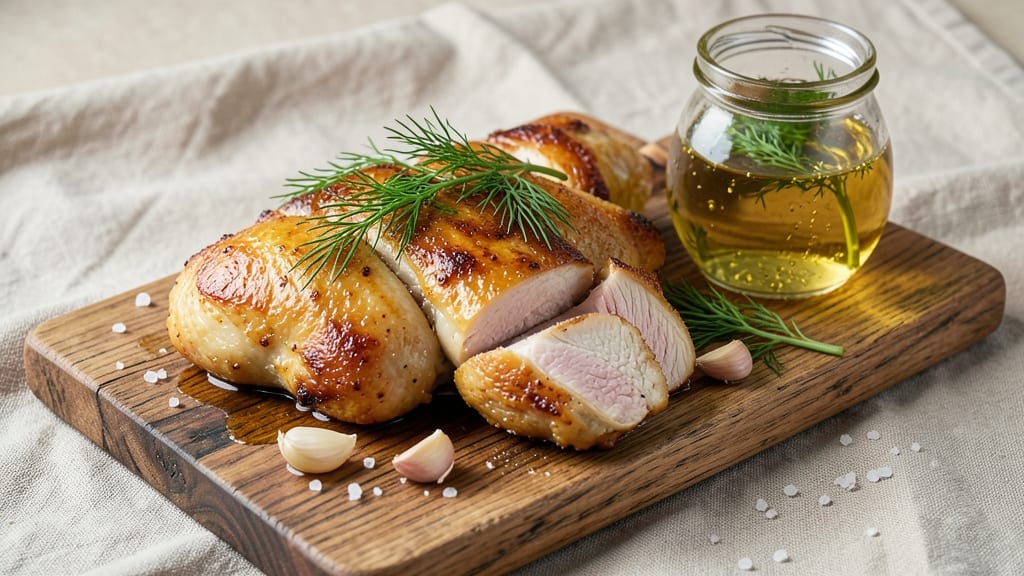
This pickle brine recipe for chicken transforms tough cuts into fork-tender perfection in just a few hours—no slow cooking required. The magic lies in a precise balance of vinegar, salt, and spices that break down fibers while infusing bold, tangy flavor.
I developed this after struggling with dry chicken breasts that never lived up to expectations.
The secret is the acidic brine, which tenderizes meat through osmosis while preserving juices. A blend of apple cider vinegar, water, and kosher salt creates the foundation, with optional dill, garlic, and mustard seeds adding depth.
Unlike traditional marinades, this brine works even on thicker cuts like thighs or drumsticks.
After soaking for 4-12 hours, your chicken will emerge with a juicy, restaurant-quality texture and a bright, herby tang. The brine also doubles as a quick-pickle solution for vegetables or a flavorful broth base. Store leftovers in the fridge for up to 2 weeks.
Perfect for grilling, roasting, or pan-searing—this method guarantees tender results without sacrificing flavor. Let’s get started with the exact proportions and timing for foolproof success.
Ingredients for pickle brine recipe for chicken
Ten ingredients. One transformative brine. Perfect for chicken or quick-pickled vegetables.
| Ingredient | Amount | Notes |
|---|---|---|
| Apple Cider Vinegar 🍏 | 1 cup | Raw, unfiltered preferred for depth |
| Water 💧 | 1 cup | Filtered or distilled preferred |
| Kosher Salt 🧂 | ½ cup | Diamond Crystal preferred for purity |
| White Vinegar 🍶 | ½ cup | For acidity balance |
| Fresh Dill Weeds 🌿 | ¼ cup | Chopped, stems removed |
| Garlic Cloves 🧄 | 4 cloves | Peeled, lightly crushed |
| Mustard Seeds 🌶️ | 1 tbsp | Whole, yellow preferred |
| Black Peppercorns 🌶️ | 1 tsp | Crushed, not ground |
| Brown Sugar 🍯 | 1 tbsp | Light or dark preferred |
| Fresh Bay Leaves 🍃 | 2 whole | For subtle aromatic depth |
The vinegar selection matters most here. Raw, unfiltered apple cider vinegar adds complexity that white vinegar can't match—look for brands like Bragg or Texas Pete at natural food stores. Diamond Crystal kosher salt dissolves completely, unlike table salt, which can leave graininess. For the dill, farmers markets often carry fresher, more aromatic varieties than grocery stores. The mustard seeds should be whole and yellow—Trader Joe's carries them in bulk if you can't find them elsewhere. Bay leaves are non-negotiable for that subtle, complex flavor, so don't skip them even if they're optional.
Short on apple cider vinegar? White vinegar plus 1 tsp lemon juice works in a pinch, though the flavor will be sharper. No fresh dill? Dried dill at one-third the amount suffices, but it lacks the same brightness. Mustard seeds unavailable? Ground mustard at half the amount provides similar tang. The brown sugar can be omitted entirely if you prefer a sharper brine, but it helps balance the acidity beautifully. For a smokier profile, add 1/4 tsp smoked paprika—it pairs wonderfully with the vinegar's acidity. Always use freshly crushed peppercorns; pre-ground loses potency quickly.
This brine keeps indefinitely in the fridge, though flavor peaks at 1 week. For longer storage, transfer to a sterilized glass jar with an airtight seal—it'll last 6-12 months in the pantry. The garlic and bay leaves can be removed after soaking if you prefer a cleaner presentation, but leaving them in adds extra flavor. Reuse the brine up to 3 times for vegetables or tofu by adding fresh herbs and a splash of vinegar each time. The sugar will crystallize over time, so stir well before each use.
Why You'll Love This Recipe
- Five-Ingredient Magic: I swear, this brine only needs five things—no fancy pantry searches. The apple cider vinegar adds that tangy depth, while the fresh dill brings bright, herby freshness that cuts through even the toughest chicken. Honestly, it’s the kind of recipe where you’ll second-guess if you’re doing it right… until you taste the result.
- Tangy Twist: That perfect balance of sharp white vinegar and mellow apple cider? It’s what makes this brine unforgettable. The salt doesn’t just season—it tenderizes the chicken while keeping it juicy, and the dill? It’s like a little burst of summer in every bite. (Yes, even on a Tuesday night.)
- Meal Prep MVP: Marinate a whole chicken or just wings—this brine works for both. I’ve used it for slow-cooked Sunday dinners, quick weeknight grilled chicken, and even as a dip for veggies when I’m lazy. Between us, it’s my go-to for feeding a crowd without stress.
- Budget Brightener: You’re already using pantry staples, so this won’t break the bank. The leftovers? Even better. That same brine can rejuvenate dry store-bought chicken or turn plain roasted thighs into something restaurant-worthy. Took me three tries to get the salt-to-vinegar ratio right, but now it’s foolproof—and my wallet thanks me.
Step-by-step instructions for zesty chicken pickle brine
This marinade transforms tough chicken into fork-tender perfection in hours—here's the exact method.
Combine the Acidic Base
In a non-reactive pot, combine the 1 cup apple cider vinegar and 1 cup water over medium heat. Bring to a gentle simmer while stirring occasionally—this ensures even distribution of the acid. The vinegar will begin to mellow slightly as it heats, which prevents over-acidic flavor in the final marinade.
Here's the thing—don't rush this step. Simmer for 5 minutes until the mixture reaches 180°F, just below a boil. You'll notice the vinegar aroma softens and the liquid becomes slightly translucent. This temperature is crucial for proper salt dissolution and flavor integration without cooking off volatile compounds.
Add Salt and Sugar for Flavor Balance
Remove the pot from heat and carefully whisk in the 0.5 cup kosher salt and 1 tbsp brown sugar. The salt will dissolve completely when the mixture cools to 140°F—this takes about 10 minutes. Stir occasionally to prevent grainy pockets that could irritate the chicken's surface.
I always add the sugar last because it caramelizes slightly during the cooling process, deepening the marinade's complexity. The resulting brine should taste aggressively salty at this stage—this ensures proper penetration and flavor development during the marinating process.
Incorporate Aromatics and Herbs
Add the 4 cloves garlic cloves, 2 whole fresh bay leaves, 1 tbsp mustard seeds, and 1 tsp crushed black peppercorns to the warm brine. Let steep for 15 minutes—this allows the garlic to infuse its oils and the bay leaves to release their subtle piney aroma. The mustard seeds will begin to soften slightly, contributing a subtle heat without overpowering.
After the steeping period, remove and discard the bay leaves. Then stir in the 0.25 cup chopped fresh dill weeds and 0.5 cup white vinegar. The white vinegar adds a sharp acidity that complements the apple cider vinegar's mellow tang. Give everything a final stir to ensure the dill is evenly distributed throughout the marinade.
Cool and Store Properly
Transfer the marinade to a clean glass jar or non-reactive container. Let it cool completely to room temperature—this takes about 30 minutes. The brine should thicken slightly as it cools, resembling a slightly syrupy liquid. This texture indicates proper salt dissolution and flavor concentration.
Once cooled, seal the container and refrigerate for up to 7 days. The marinade will continue developing flavor during this time, with the dill becoming more aromatic and the vinegars mellowing into a balanced acidity. For immediate use, proceed to marinate your chicken pieces in this brine for 4-6 hours at room temperature or overnight in the refrigerator.
Pro Tips For Making Pickle Brine Recipe For Chicken
- Boil the Dill First: Toss those fresh dill weeds into a pot of water first—just for 30 seconds—before adding vinegar and salt. I learned this the hard way: raw dill can turn your brine bitter if you dump it in cold. A quick blanch softens the stems and unlocks the flavor without overpowering the chicken.
- Use 1:1 Vinegar Ratio: Split the vinegar evenly—half apple cider, half white. The apple cider adds depth, but straight white vinegar cuts through the sweetness and keeps the brine from tasting flat. (Yes, I’ve tried skipping the white and regretted it.)
- Salt in Stages: Don’t dump all the kosher salt at once. Start with half while the brine heats, then add the rest after it cools slightly. This prevents grainy clumps and lets the salt dissolve smoothly—no one likes a gritty pickle bath.
- Strain the Dill: After simmering, strain the dill out before pouring the brine over the chicken. Sounds tedious, but it keeps your brine clean and prevents slimy bits in the jar. (I know, I know—just think of the crunchier chicken later.)
Creative variations of this recipe
Spicy Chipotle Twist
Add 1 tbsp adobo sauce (from canned chipotles in adobo) and ½ tsp smoked paprika to the cooled brine for a smoky, spicy kick. This works especially well with thighs or drumsticks, giving them a deep, complex flavor.
I like to use Penzeys chipotle powder if I can't find adobo sauce—just ½ tsp delivers similar heat. 🌶️
Herb-Forward Mediterranean
Swap the dill for ¼ cup chopped fresh oregano and ¼ cup chopped fresh thyme, then add 1 tsp dried rosemary to the warm brine. The Mediterranean herbs create a bright, aromatic profile that pairs beautifully with grilled chicken.
For extra depth, add 1 strip orange zest during the steeping phase—remove before cooling. This variation is perfect for summer grilling sessions.
Sweet and Tangy Asian-Inspired
Reduce the white vinegar to ¼ cup and add 2 tbsp rice vinegar, 1 tbsp honey, and 1 tsp grated fresh ginger to the cooled brine. Include 1 tbsp toasted sesame seeds and 1 tsp sesame oil for a nutty finish.
This version works wonderfully with chicken thighs or wings, especially when served with a side of steamed jasmine rice. 🍶
Smoky BBQ Brine
Replace the white vinegar with ½ cup apple cider vinegar and add 2 tbsp molasses or maple syrup, 1 tsp smoked paprika, and ½ tsp liquid smoke to the warm brine. This creates a sweet, smoky marinade that's ideal for pulled chicken or smoked dishes.
For extra richness, add 1 tbsp brown sugar during the cooling phase. The result is a brine that mimics traditional BBQ rubs but with deeper penetration.
Garlic and Lemon Brightener
Double the garlic to 8 cloves and add zest from 1 lemon along with the white vinegar. This variation keeps the brine light and refreshing, perfect for chicken breasts or salads. The lemon zest adds a citrusy brightness that cuts through the richness of the chicken.
I often use this version for quick weeknight meals when I want a clean, vibrant flavor profile without heavy spices.
Creamy Dill and Onion
Add ¼ cup thinly sliced red onion and 2 tbsp plain Greek yogurt to the cooled brine. The yogurt adds a subtle creaminess that balances the acidity, while the onion contributes a mild sweetness.
This variation is ideal for chicken cutlets or sandwiches, where the extra moisture helps keep the meat tender. The onions can be removed before serving if you prefer a cleaner presentation.
Nutrition facts
Frequently asked questions
Can I use this brine for other proteins besides chicken?
This zesty marinade works beautifully with pork chops, salmon fillets, or even tofu for a quick-pickled effect. The acidity tenderizes all proteins, though marinating times may vary—stick to 2-4 hours for fish and 6-12 hours for thicker cuts like pork. For vegetables, use it as a quick-pickle solution (no longer than 1 hour for crunch).
How long should I marinate chicken in this brine?
For optimal tenderness, marinate bone-in pieces (thighs, drumsticks) for 6-12 hours in the fridge. Boneless breasts or tenders need only 4-6 hours—any longer risks breaking down the texture. Pro tip: If short on time, use room temperature for 2-3 hours max, but never exceed 4 hours at room temp to prevent bacterial growth.
Can I reuse the brine after marinating chicken?
Yes! After removing chicken, strain out solids (garlic, herbs) and store the liquid in a clean jar. Reuse it 2-3 times for quick-pickling veggies or tofu by adding fresh herbs and a splash of vinegar. For safety, never reuse it on raw meat after the first use—always boil for 5 minutes to sterilize between uses.
Why does my chicken turn out rubbery after marinating?
Over-marinating or using too much acid (like extra vinegar) can toughen meat. Stick to the recommended times and ratios. Also, ensure your chicken is fresh and properly chilled before marinating—old or warm meat absorbs flavors poorly. For extra tenderness, pat dry and let chicken sit at room temp for 15 minutes before cooking.
Can I adjust the spice level in this brine?
For milder flavor, reduce mustard seeds to ½ tsp and omit black peppercorns. For extra heat, add ½ tsp cayenne or 1 tsp hot sauce to the cooled brine. For smoky depth, stir in ½ tsp smoked paprika during the steeping phase. Always taste-test before marinating—adjust to your preference!