
Breakfast & Brunch
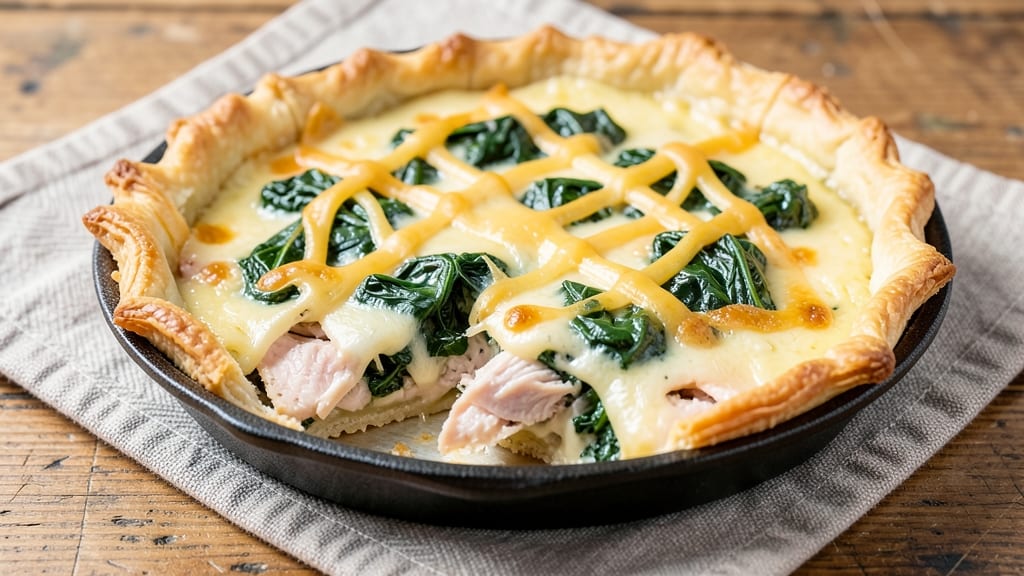
This spinach chicken quiche recipe delivers the perfect balance of flaky crust and rich, savory filling—ideal for brunch or a hearty breakfast. Growing up in Georgia, I learned that great baking starts with a crisp, golden crust, and this version never disappoints.
The secret lies in chilling the dough thoroughly before baking, ensuring that signature flakiness we all crave.
Preparing this quiche takes just 30 minutes of active work, plus 45 minutes in the oven, making it perfect for busy mornings. The filling combines tender cooked chicken, wilted spinach, and a creamy egg mixture that sets to perfection.
Every bite offers a mix of textures—crisp crust, creamy custard, and tender chicken—all wrapped in a dish that feels both comforting and impressive.
What makes this recipe stand out is its versatility. You can use a classic pie crust or opt for gluten-free alternatives without sacrificing flavor. The filling can be prepped ahead and baked fresh, ensuring you always have a delicious meal ready when you need it.
Whether you're serving it at brunch or packing it for lunch, this quiche delivers restaurant-quality results at home.
The key to success is patience—don’t rush the crust or the baking process. A properly baked quiche has a golden, slightly puffed crust and a custard that’s just set, not rubbery. Trust the method, and you’ll achieve a dish that’s worth every minute of preparation. Let’s get started!
Ingredients for spinach chicken quiche
Six ingredients make the filling, plus one golden crust. Simple enough for weeknights, impressive enough for brunch.
| Ingredient | Amount | Notes |
|---|---|---|
| Pie Crust (Store-Bought or Homemade) 🥧 | 1 whole | Chilled, rolled out to 12-inch diameter |
| Large Eggs 🥚 | 6 whole | Room temperature for even baking |
| Heavy Cream 🥛 | 1 cup | Full-fat for rich custard |
| Whole Milk 🥛 | ½ cup | Warmed slightly for smooth blend |
| Shredded Sharp Cheddar Cheese 🧀 | 1 ½ cups | Freshly grated preferred |
| Cooked Chicken Breast 🍗 | 1 ½ cups | Diced, skinless, boneless |
| Fresh Spinach 🍃 | 5 oz | Chopped, wilted and drained |
| Green Onions 🧅 | 3 whole | Sliced thin, white and green parts |
| Garlic Cloves 🧄 | 2 cloves | Minced, for flavor depth |
| Salt 🧂 | 1 tsp | Kosher or sea salt |
| Ground Black Pepper 🌶️ | ½ tsp | Freshly ground preferred |
| Nutmeg 🌿 | ¼ tsp | Freshly grated for warmth |
| Unsalted Butter 🧈 | 1 tbsp | For crust brushing |
| All-Purpose Flour 🌾 | 1 tbsp | Optional for egg wash |
The crust is non-negotiable here. Pillsbury Classic is my go-to for store-bought—it's foolproof and chills fast. Making your own? Butter-based crusts give the best flakiness, but gluten-free crusts work too if needed. I always brush the bottom with melted butter before adding filling—prevents a soggy crust. For a shortcut, Trader Joe's has pre-made crusts that save time without sacrificing quality. Just don't skip chilling the dough before rolling—30 minutes in the fridge makes all the difference.
No sharp cheddar? Gruyère or Swiss add a nice depth, though cheddar's tanginess is classic. The spinach can be frozen (thaw and drain well), but fresh is brighter. Pre-cooked rotisserie chicken is a lifesaver here—just shred it and drain any excess liquid. Green onions add freshness, but chives or scallions work too. The nutmeg might seem small, but it's what gives that signature quiche warmth. Penzeys sells pre-grated nutmeg if you hate grating, but a microplane on fresh works best. For the eggs, room temperature is key—they blend smoother and bake more evenly.
This quiche tastes even better the next day—3-4 days in the fridge, sealed tightly. Freeze portions for up to 3 months by wrapping individual slices in foil. Reheat in a 350°F oven for 15 minutes to revive that creamy texture. I always bake two crusts at once—one for dinner, one for lunch the next day. The filling can be prepped ahead and kept in the fridge for 24 hours before baking. Just let it sit at room temperature for 10 minutes before assembling to prevent condensation.
Why You'll Love This Recipe
- No-Fuss Assembly: I swear by this recipe because it’s the kind of dish that lets me not stress. Five minutes of chopping spinach, crumbling cheese, and tossing in pre-cooked chicken—then pour the custard, pop it in the oven, and walk away. (Yes, even on a Tuesday night.)
- Cheesy Creamy Magic: That sharp cheddar melting into the custard while the heavy cream and milk make it velvety? It’s the kind of texture that makes you pause mid-bite. The crust stays crisp, but the filling? Pure satisfaction.
- Lunchbox Hero: Between us, this is my go-to for meal prep. Slice it up, wrap in foil, and it’s a hearty lunch for days—no sad desk salads here. Kids (and my picky husband) actually eat it cold straight from the fridge.
- Budget Breakfast Win: Eggs, milk, and cheese stretch further than you’d think, especially with store-bought crust. I’ve made this for brunch with friends or as a cheap, filling dinner when groceries were tight—always delivers without breaking the bank.
Step-by-step instructions for spinach chicken quiche
Here's how to build a golden, flaky crust filled with creamy egg custard and savory chicken.
Prep the Crust for Maximum Flakiness
Preheat your oven to 375°F. If using homemade pie crust, roll it out to a 12-inch diameter circle on a floured surface. For store-bought crust, press it gently into a 9-inch pie dish without stretching—this prevents shrinking. The key to flaky layers is keeping everything cold. If your crust softens while working, chill it in the fridge for 10 minutes before proceeding.
Brush the bottom and sides of the crust with 1 tablespoon melted unsalted butter, then sprinkle evenly with 1 tablespoon all-purpose flour. This creates steam during baking, which separates the layers for that signature flakiness. Press the crust gently into the dish, then chill again while you prepare the filling.
Sauté the Spinach and Chicken Filling
In a large skillet over medium heat, melt 1 tablespoon unsalted butter. Add the 2 minced garlic cloves and sauté for 30 seconds until fragrant—don't let it brown or it'll turn bitter. Add the 5 ounces chopped fresh spinach and cook for 2-3 minutes until just wilted. Drain any excess liquid using a fine-mesh strainer and set aside.
In the same skillet, add the 1.5 cups diced cooked chicken breast and warm through for 1 minute. Season with 1 teaspoon salt, ½ teaspoon ground black pepper, and ¼ teaspoon freshly grated nutmeg. Stir in the 3 sliced green onions and remove from heat. This step develops the savory base that'll shine through the custard.
Whisk the Egg Custard
In a large bowl, whisk together the 6 room-temperature large eggs until no streaks remain. Add the 1 cup heavy cream and ½ cup whole milk, whisking constantly for 1 minute until fully combined. This creates a smooth, velvety texture that'll set perfectly in the oven.
Gradually whisk in the 1.5 cups shredded sharp cheddar cheese until evenly distributed. The cheese should melt smoothly into the custard—if you notice any lumps, strain the mixture through a fine-mesh sieve. Fold in the sautéed spinach-chicken mixture, being careful not to overmix. The filling should be thick but pourable.
Assemble and Bake to Golden Perfection
Pour the custard filling into the prepared pie crust, spreading it evenly to the edges. The filling should reach about ½ inch from the top—this allows for rise while preventing overflow. Sprinkle any remaining cheese on top for extra richness.
Bake on the middle rack for 40-45 minutes until the custard is set and the crust is deep golden brown. The edges should be puffed and slightly crisp, while the center should still jiggle slightly when gently shaken. If the top browns too quickly, tent loosely with foil after 30 minutes.
Rest and Serve Warm
Remove the quiche from the oven and let it rest for 10-15 minutes before slicing. This resting period allows the custard to firm up slightly and prevents it from running when you cut into it. The crust should be warm but not hot to the touch.
Slice into 6 equal wedges and serve immediately. Each bite should deliver a perfect balance of flaky crust, creamy custard, and savory chicken-spinach filling. For best results, serve with a simple arugula salad or crusty bread to soak up any extra custard.
Pro Tips For Making Spinach Chicken Quiche
- PREHEAT THE DISH FIRST: If you’re using a store-bought crust, pop the quiche dish into a 375°F (190°C) oven for 5 minutes before adding the filling—this prevents a soggy bottom when the hot custard hits the cold crust. I learned this the hard way after scraping up a half-baked mess from a gummy crust.
- DRY THE SPINACH WELL: Wilted spinach releases water like a sad sponge. Drain it in a colander, then press out every last drop between paper towels—this keeps your custard from turning into a watery soup. Skip this, and your quiche will taste more like spinach soup than quiche.
- BAKE UNTIL THE CENTER JIGGLES: The custard should look set but still have a slight wobble in the middle when you nudge it—about 45-50 minutes total. Overbaking turns it rubbery, and underbaking leaves it dangerously raw. Use a toothpick: it should come out clean but slightly moist.
- SALT THE CHEESE BEFORE ADDING: Shredded cheese loses its sharpness when it sits. Sprinkle a pinch of salt directly onto the cheddar while you’re prepping it—this revives its flavor and cuts through the richness of the heavy cream. I was skeptical until I tried it; now I never skip it.
Common mistakes when making great spinach chicken quiche
Overfilling the Crust
This is the biggest rookie mistake I see—packing the filling too high. When you fill your quiche crust more than ½ inch from the top, it'll overflow during baking, creating a messy, uneven top. I've ruined more than a few quiches this way, especially when guests are waiting.
The custard needs room to rise slightly, but not enough to spill over the edges. Trust me, the ½ inch rule is non-negotiable for a professional-looking result. 🥧
Skipping the Chill
Never, ever skip chilling the crust before baking. I learned this the hard way during my first professional kitchen rotation—un-chilled crusts shrink dramatically in the oven, leading to a sad, puckered bottom.
Always chill your crust for atstrong>30 minutes before baking, and if you're using store-bought, follow the package instructions for proper handling. The extra time prevents that dreaded "soggy bottom" scenario that ruins everything.
Overmixing the Eggs
When you overmix the egg custard, you introduce too much air, which creates large bubbles that burst during baking, leaving you with a cracked top. I see this all the time in home kitchens—people whisking those eggs like they're making meringue.
Whisk just until the yolks and whites are fully combined, about 30 seconds, then stop. The filling should be smooth but not frothy. For extra insurance, strain it through a fine-mesh sieve before pouring into the crust. ✨
Underbaking the Custard
Pulling your quiche out too early is a cardinal sin. The center should still jiggle slightly when you gently shake the dish—this indicates it's perfectly set. If you cut into it too soon, you'll end up with a runny, unappetizing mess.
I've had to scrape up more than one failed attempt from the bottom of my oven. Bake until the edges are puffed and golden, and the center is just set but still slightly wobbly. The residual heat will finish cooking it as it rests.
Ignoring the Resting Time
Skipping the 10-15 minute rest after baking is another common mistake that leads to disaster. When you cut into a freshly baked quiche, the hot custard runs everywhere, making a mess of your beautiful presentation. This resting period allows the proteins to set properly and the structure to firm up.
I've seen professional chefs scold home cooks for this—it's a simple step that makes all the difference. Patience here ensures clean slices and a professional finish. 💡
Using Cold Ingredients
Cold eggs, cold cream, or cold chicken will create a dense, rubbery custard that no one wants to eat. Always use room-temperature eggs and dairy—they blend more smoothly and bake evenly.
I keep my eggs out for 30 minutes before starting, and I warm my cream and milk slightly before mixing. Cold ingredients are the fastest way to ruin an otherwise perfect quiche. Trust the process and let everything come to temperature first. ❄️
Nutrition facts
Frequently asked questions
Can I make this quiche ahead of time?
This quiche tastes even better the next day. Assemble it completely, then refrigerate for up to 24 hours before baking. For make-ahead convenience, prep the filling (without the eggs) and store it in the fridge for 1 day. Bake fresh when ready—just add the eggs and bake as directed. The flavors meld beautifully overnight!
What's the best way to reheat leftovers?
Slice the quiche into portions and reheat in a 350°F oven for 10-15 minutes until warmed through. For a quick option, use the microwave on 50% power for 30-45 seconds per slice. The oven method preserves the crust's texture better, while the microwave works in a pinch. Never reheat straight from the fridge—bring to room temperature first.
Can I substitute the chicken with another protein?
Yes! Swap chicken for shrimp, sausage, or crumbled bacon—just adjust cooking times. For a vegetarian version, use mushrooms or tofu instead. The key is ensuring your protein is fully cooked before mixing with the egg custard. Shrimp should be pre-cooked and drained well to prevent a watery filling.
Why did my quiche come out rubbery?
Rubbery quiche usually means the custard was underbaked or overmixed. Make sure to bake until the center jiggles slightly when shaken (40-45 minutes at 375°F). Also, whisk eggs just until combined—overmixing incorporates too much air, causing cracks and rubberiness. Room-temperature ingredients are critical too; cold eggs and dairy create dense, rubbery results.
How can I make this gluten-free?
Use a gluten-free pie crust (like Bob's Red Mill or store-bought GF crusts) and ensure all ingredients are certified gluten-free. Check your cheese and broth for hidden gluten. For extra insurance, use xanthan gum in your crust recipe to improve texture. The filling stays the same—just the crust changes. Many GF crusts require a bit more butter for flakiness, so don't skimp!