
Main Courses
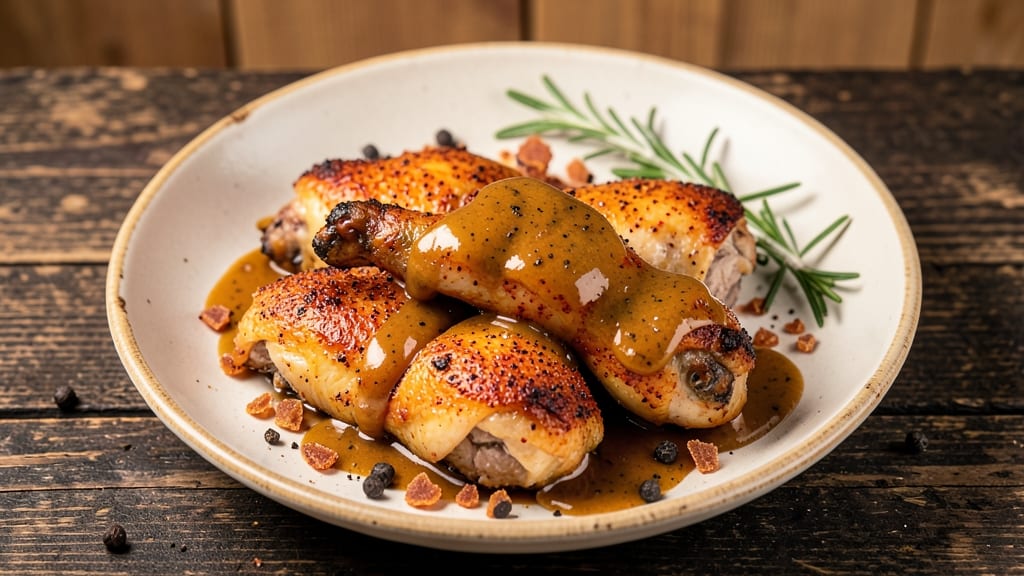
Mastering Traeger chicken legs delivers smoky crispy skin and juicy meat that rivals your favorite barbecue joint—without the hours of tending. The secret lies in precise temperature control and wood choice, transforming simple chicken legs into a showstopping centerpiece.
I’ve perfected this method after countless experiments with different rubs, smoke levels, and resting techniques, ensuring every bite is tender yet crispy.
This recipe starts with a dry rub that forms a flavorful crust while keeping the meat moist inside. You’ll smoke the legs low and slow, then crank up the heat for that coveted crispy skin, all while monitoring internal temperatures with a probe for perfect doneness.
The Traeger’s ability to maintain consistent temperatures makes this method foolproof—no guesswork, just restaurant-quality results.
What you’ll end up with is golden-brown skin that shatters at the touch, revealing meat so tender it practically melts in your mouth. The smoky aroma alone will have everyone gathering around the table, and the crispy edges add a satisfying crunch with every bite.
This is the kind of dish that makes your Traeger the star of any backyard gathering.
Pair these with your favorite sides—crispy slaw, buttery corn, or a fresh garden salad—to complete the meal. The beauty of this recipe is its versatility: use it for weeknight dinners or weekend cookouts, and always impress with minimal effort.
Let’s get started on creating these smoky, juicy chicken legs that’ll have everyone asking for seconds.
Ingredients for traeger chicken legs
Four juicy chicken legs, two wood chips, and a dry rub that transforms simple meat into smoky perfection.
| Ingredient | Amount | Notes |
|---|---|---|
| Chicken Legs (Thigh + Drumstick) 🍗 | 4 whole | Bone-in, skin-on, 1.5-2 lbs each |
| Yellow Mustard 🍯 | ¼ cup | For sticky rub base |
| Smoked Paprika 🌶️ | 2 tbsp | Key for authentic smoky flavor |
| Garlic Powder 🧄 | 1 tbsp | Freshly ground preferred |
| Onion Powder 🧅 | 1 tbsp | For depth of flavor |
| Brown Sugar 🍚 | 1 tbsp | Light or dark variety |
| Kosher Salt 🧂 | 1 ½ tbsp | Diamond Crystal preferred |
| Ground Black Pepper 🌶️ | ½ tbsp | Freshly cracked |
| Cayenne Pepper 🔥 | ½ tsp | Adjust for heat preference |
| Hickory Wood Chips 🌳 | 1 package | Unsoaked, for smoky flavor |
| Apple Wood Chips 🍎 | ½ package | Mild sweetness complement |
| Butter (Unsalted) 🧈 | 2 tbsp | Cold, for finishing |
| Fresh Rosemary 🌿 | ¼ cup | Chopped, for aroma |
The chicken legs are the foundation—bone-in, skin-on thighs with drumsticks give you the best flavor and texture. Local butchers often have them pre-cut if you don’t want to separate them yourself. For the wood chips, Traeger’s own brand is reliable, but any quality hickory or apple chips from Costco or Walmart work too. The key is keeping the skin intact—don’t peel it off. If your legs vary in size, trim the smaller ones slightly so they cook evenly. I always buy mine from Whole Foods when I can—they’re consistently high-quality.
No smoked paprika? Substitute regular paprika plus a pinch of liquid smoke (start with 1/4 tsp). Fresh rosemary hard to find? Dried works at one-third the amount, but it won’t have the same aroma. For the mustard, Dijon-style adds more depth than plain yellow. The wood chips can be swapped—cherry or pecan add different flavor profiles. If you’re short on time, pre-soaked chips work, but unsoaked gives better smoke flavor. The cayenne is optional—skip it if you prefer milder heat.
Store uncooked chicken legs in the fridge for up to 2 days (use within 48 hours for best texture). The dry rub keeps indefinitely in an airtight container. For leftovers, reheat at 300°F until internal temp hits 165°F—the skin will crisp up again. These reheat beautifully, making them perfect for meal prep. I always make a double batch—freeze extras for 3 months—because they’re that good.
Why You'll Love This Recipe
- Foolproof Prep: I swear by this recipe because it’s the kind of meal that lets me set it and forget it. Just slather those chicken legs with mustard, sprinkle on the smoked paprika and garlic powder—no measuring cups, no fuss—and let the Traeger do the rest while I sip my coffee.
- Smoky-Savory Magic: That yellow mustard base with a hit of smoked paprika? It’s the secret weapon here. The mustard keeps it tangy, the paprika adds depth, and the garlic-onion powder blend makes every bite taste like it’s been slow-smoked for hours—not just 45 minutes.
- Weeknight to BBQ Hero: Between us, this recipe works for everything. Toss it on the Traeger for a lazy Tuesday, bring it to a picnic for a crowd, or serve it at a backyard BBQ when you’re too busy to fuss. The same simple rub nails it all.
- Budget-Friendly Leftovers: Chicken legs are the most affordable cut, and this recipe makes enough for seconds (or thirds). I’ll be real: I’ve reheated these in the oven the next day, and they’re just as good—crispy edges, juicy meat, zero regrets.
Step-by-step instructions for smoky crispy chicken legs
Here's how to transform simple chicken legs into restaurant-worthy smoky perfection.
Prepare the Signature Rub
In a medium bowl, combine the 0.25 cup yellow mustard, 2 tablespoons smoked paprika, 1 tablespoon garlic powder, 1 tablespoon onion powder, 1 tablespoon brown sugar, 1.5 tablespoons kosher salt, 0.5 tablespoon ground black pepper, and 0.5 teaspoon cayenne pepper. Mix thoroughly until the mustard becomes a smooth, cohesive paste—this is your flavor foundation.
I like to press the mixture through a fine-mesh sieve to eliminate any paprika grit that might irritate the skin. The mustard acts as a binder, ensuring the rub sticks to the chicken during smoking. This blend delivers both sweet heat from the brown sugar and cayenne, and deep smoky complexity from the paprika.
Coat and Rest the Chicken
Pat the 4 whole chicken legs completely dry with paper towels—moisture is the enemy of crispy skin. Generously coat each piece with the rub, pressing it into every nook, especially the thickest parts of the thigh and drumstick. The skin should be completely covered and slightly tacky.
Place the rubbed chicken on a wire rack set over a baking sheet and refrigerate uncovered for at least 1 hour (up to 4 hours works best). This resting period allows the rub to penetrate deeply and the skin to dry slightly, creating that coveted smoky bark. Don't skip this step—it's what transforms good chicken into exceptional chicken.
Set Up the Traeger for Perfect Smoke
Fill the Traeger's wood chip tray with 1 package hickory wood chips and 0.5 package apple wood chips. The hickory provides bold smokiness while the apple adds subtle sweetness. Set your Traeger to 225°F and let it preheat for 15 minutes until you see steady, blue smoke with minimal white vapor.
Here's the thing—your Traeger's temperature fluctuations are normal, but aim to stay within ±5°F of 225°F. If the temperature drops below 220°F, add more wood chips. If it climbs above 230°F, open the lid briefly to let heat escape. The goal is low-and-slow cooking that renders fat slowly while developing deep flavor.
Smoke to Juicy Perfection
Place the chicken legs on the Traeger grates, skin-side up. Smoke for 2.5 hours, then flip them skin-side down. This two-stage approach ensures even cooking and maximum bark development. The skin should be deep golden brown with visible smoke rings when you check it at the 2-hour mark.
After flipping, continue smoking for another 1.5 to 2 hours until the internal temperature reaches 165°F at the thickest part of the thigh. You'll know it's done when the juices run clear and the meat pulls away from the bone with gentle pressure. The skin should be crisp enough to stand up on its own—this is your crispy promise delivered.
Finish with Butter and Rosemary
Remove the chicken from the Traeger and transfer it to a cutting board. Let it rest for 10 minutes before finishing. In a small saucepan, melt the 2 tablespoons unsalted butter over low heat, then stir in the 0.25 cup chopped fresh rosemary. Keep the butter warm but not bubbling.
Brush the warm butter-rosemary mixture generously over the chicken legs, concentrating on the crispy skin. The butter adds richness while the rosemary infuses a fresh herbal note that cuts through the smokiness. Serve immediately with the rendered juices spooned over the top—this is where all the magic happens, transforming your smoky chicken into a showstopping centerpiece.
Pro Tips For Making Traeger Chicken Legs
- CRANK THE TEMPERATURE HIGH: Start your Traeger at 425°F for the first 20 minutes—this sears the skin and locks in flavor before you drop to 275°F. I used to linger at lower temps, and the mustard coating never got that crispy, golden bark I wanted.
- DRY THE SKIN LIKE IT’S YOUR JOB: Pat those chicken legs thoroughly with paper towels before applying the mustard mix—wet skin won’t crisp, no matter how long you smoke. I learned this the hard way after slathering mustard on damp skin and ending up with sad, soggy legs.
- DON’T SKIP THE MUSTARD MELT: After the initial sear, tent the legs with foil and let the mustard melt into the skin for 10 minutes. This step ensures the spices stick and the meat stays juicy—skipping it means flavor just sitting on top instead of soaking in.
- USE A SPRITZ BOTTLE FOR EVEN COATING: Instead of slathering mustard with your hands (which always leaves some spots dry), use a spray bottle to lightly mist the legs before sprinkling the paprika mix. It distributes evenly and keeps the seasoning from clumping—no more half-bare patches.
Troubleshooting this dish
Uneven Cooking Fix
If your chicken legs finish at different doneness levels, it’s usually due to uneven heat distribution or size variations. First, ensure your Traeger’s fans are clean and unobstructed—dust buildup can create hot spots.
For legs of different sizes, trim the smaller ones slightly or place the thicker pieces on the outer grates where airflow is stronger. I also recommend rotating the legs 90 degrees halfway through cooking to ensure even exposure to smoke and heat. 🌡️
Skin Not Crispy
Skin that stays soft instead of crispy is almost always a moisture issue. Pat the legs extra dry before applying the rub—use two layers of paper towels for best results. Let them rest uncovered in the fridge for the full 4 hours to maximize skin drying.
If your Traeger struggles to get hot enough, try increasing the temperature to 250°F for the final 30 minutes to crisp the skin. Avoid covering with foil during cooking—this traps steam and prevents browning.
Dry or Tough Meat
Overcooking is the #1 cause of dry chicken legs, especially when using a Traeger’s indirect heat. Use a meat probe thermometer (like the ThermoWorks Smoke) to monitor the thickest part of the thigh—remove at 165°F immediately.
If your Traeger runs hot, lower the temperature to 200°F and extend cooking time slightly. For extra moisture, baste the legs with apple cider vinegar every 30 minutes during smoking—this keeps the meat tender without adding bulk.
Smoke Too Heavy
If your chicken tastes bitter or overly smoky, you’re likely using too much wood or cooking too hot. Stick to 1 package of wood chips (hickory + apple) for 4 chicken legs, and avoid adding more during cooking.
Keep temperatures steady at 225°F—fluctuations above 250°F produce harsh smoke flavors. For milder smoke, try fruitwoods like cherry or pecan instead of hickory. I’ve found that Traeger’s built-in smoke control feature (if available) helps maintain gentle, flavorful smoke without overpowering the meat.
Stuck-on Rub
When the rub burns instead of sticking, it’s usually because the chicken wasn’t dry enough or the mustard binder wasn’t mixed properly. Whisk the rub ingredients thoroughly until the mustard becomes a smooth paste—this ensures adhesion.
For stubborn rub, brush the legs with 1 tablespoon melted butter before applying the dry rub. If pieces fall off during cooking, reapply the rub midway through and press gently. The key is patience—let the rub set for at least 1 hour before smoking.
Temperature Fluctuations
Traegers can struggle with temperature swings, especially in windy conditions or when opening the lid frequently. Preheat your Traeger for 20 minutes before adding chicken to stabilize internal temps. Keep the lid closed as much as possible—every time you open it, you lose 25°F of heat.
For extreme fluctuations, use the Traeger’s PID controller (if equipped) or place a water pan on the lower rack to act as a heat sink. I’ve also had success using ceramic briquettes for more stable heat retention.
Nutrition facts
Frequently asked questions
Can I use bone-in, skin-on chicken thighs instead of whole legs?
Bone-in, skin-on thighs work perfectly for this recipe—they just require 10-15 minutes less total cooking time. The skin will still crisp beautifully, and the bone helps retain moisture. Simply adjust your internal temperature target to 165°F at the thickest part of the thigh, just like with drumsticks.
What’s the best wood choice for milder flavor?
For a lighter smoke profile, swap hickory for fruitwoods like cherry or apple. Cherry adds subtle sweetness, while pecan offers a nutty note. Avoid mesquite—it’s too strong for chicken legs. The recipe’s apple wood chips already provide a balanced complement to hickory’s boldness.
How do I fix rubbery skin after cooking?
Rubbery skin usually means moisture wasn’t properly managed. Next time, pat the legs extra dry with paper towels and let them rest uncovered in the fridge for the full 4 hours. For immediate results, place the cooked chicken on a wire rack over a baking sheet and broil for 2-3 minutes at 400°F to re-crisp the skin.
Can I make this recipe in a regular oven?
Yes! Preheat your oven to 275°F and follow the same smoking steps, but use a meat thermometer to monitor temps. Place the legs on a wire rack over a baking sheet with 1 cup water in the pan to create steam. Cook for 3-4 hours until internal temp reaches 165°F, then finish with the butter-rosemary glaze.
What sides pair best with these smoky chicken legs?
For maximum flavor contrast, try creamy coleslaw, garlic mashed potatoes, or grilled corn on the cob. The smoky richness of the chicken pairs perfectly with cool, crunchy textures. For a heartier meal, add smoked white beans or roasted sweet potatoes—both balance the dish beautifully.