
Sauces & Condiments
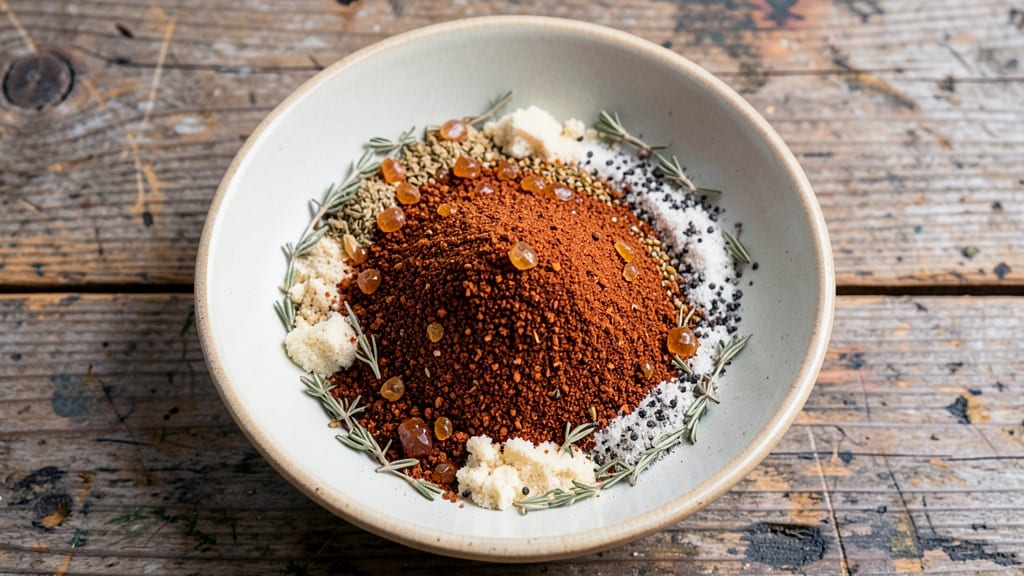
This Traeger chicken rub recipe transforms ordinary grilled chicken into smoky, restaurant-quality masterpieces with just a few simple ingredients. The blend of paprika, garlic powder, and brown sugar creates a perfect balance of heat, sweetness, and depth that clings beautifully to the meat.
I developed this mix after years of experimenting with different spice combinations, and it consistently delivers that coveted bark while keeping the meat juicy inside.
The beauty of this dry rub lies in its versatility and simplicity—just mix, store, and apply. With precise measurements in tablespoons, you can easily scale the recipe to match your needs, whether you're smoking a few pieces or a whole bird.
The rub works equally well on chicken breasts, thighs, or wings, making it a true workhorse for any grill master's toolkit.
What sets this recipe apart is how it enhances the natural flavors of the chicken while adding layers of complexity through smoldering spices. The brown sugar caramelizes beautifully on the Traeger, creating a sweet, sticky crust that contrasts perfectly with the smoky aroma.
Once you try this blend, you'll never go back to store-bought seasonings again.
Store the rub in an airtight container for up to three months, and apply 1-2 tablespoons per pound of chicken before smoking. The result is chicken so flavorful, it becomes the star of any meal. Let's get started on creating your perfect blend!
Ingredients for traeger chicken rub
Nine simple spices transform Traeger chicken into restaurant-worthy masterpieces.
| Ingredient | Amount | Notes |
|---|---|---|
| Smoked Paprika 🌶️ | 3 tbsp | For deep smoky flavor |
| Brown Sugar 🍚 | 2 tbsp | Light or dark variety |
| Garlic Powder 🧄 | 1 ½ tbsp | Freshly ground preferred |
| Onion Powder 🧅 | 1 tbsp | Enhances sweetness |
| Ground Black Pepper 🌶️ | 1 tbsp | Freshly cracked for bite |
| Dried Thyme 🌿 | 1 tbsp | Earthy depth |
| Ground Cumin 🌿 | ½ tbsp | Warmth without overpowering |
| Kosher Salt 🧂 | 1 tbsp | Adjust to taste |
| Cayenne Pepper 🔥 | ½ tsp | Adjust for heat preference |
| Mustard Powder 🥫 | ½ tsp | Subtle tang |
The smoked paprika is non-negotiable here—it's what gives that signature Traeger bark. Penzeys or bulk bins at natural food stores have the best quality, but the regular grocery store stuff works fine if it's labeled 'smoked.' Brown sugar caramelizes beautifully on the Traeger, so don't skimp. I always grab Dome brand because it's consistently light and fine. The garlic powder should be freshly ground if possible—pre-ground loses its punch fast. For the mustard powder, Bob's Red Mill is my go-to, but any quality brand works. If you're buying spices in bulk, store them in airtight containers away from light to preserve their flavor.
No smoked paprika? Regular paprika plus a pinch of liquid smoke gets you close. Short on brown sugar? White sugar plus a splash of molasses mimics the caramelization. The mustard powder can be swapped for a tiny bit of Dijon powder if you've got it. No cayenne? Red pepper flakes at half the amount adds heat without the same depth. Fresh thyme is ideal, but dried works at one-third the amount. The key is balancing sweetness, heat, and smokiness—start with the measurements here, then adjust to taste. If you're using this on chicken thighs, you might want to add an extra 0.5 tbsp of brown sugar for extra caramelization.
This rub keeps for up to 3 months in an airtight container in a cool, dark place. I like to portion it into small jars so I can grab what I need without digging through the whole batch. If you're making a big batch, store it in the freezer for up to 6 months—just let it sit at room temperature for 10 minutes before using. The rub is best applied 1-2 tablespoons per pound of chicken, patted on evenly before smoking. Trust me, the first time you see that beautiful bark form on your chicken, you'll be hooked.
Why You'll Love This Recipe
- Five-Ingredient Magic: I swear by this mix—just toss those five pantry staples (smoked paprika, brown sugar, garlic powder, onion powder, and black pepper) into a bowl, stir, and boom. No fancy equipment, no stress, and honestly? It’s the kind of rub that makes me feel like I actually cooked something.
- Smoky-Sweet Obsession: That caramelized brown sugar and smoked paprika combo? It’s like a hug for your taste buds. The garlic and onion powders sneak in depth without overpowering, and the black pepper gives it a little kick—every bite tastes like a tiny victory.
- Tailgate or Tuesday: Between us, this rub works everywhere. Grill it for summer BBQs, toss it on chicken thighs for a weeknight meal, or even use it on pork chops when I’m feeling fancy. My kids ask for it at school lunches, and my husband steals leftovers straight from the fridge.
- Leftovers That Don’t Suck: Here’s what sold me—this rub turns plain chicken into something so good, even reheated, it’s still crave-worthy. I make a big batch, rub a bunch of thighs, and have dinner covered for days. Not the prettiest, but the taste makes up for it every time.
Step-by-step instructions for smoky-spiced Traeger chicken rub
Mix these spices together and you'll have a bold, aromatic blend perfect for Traeger-cooked chicken.
Combine Dry Ingredients in a Mixing Bowl
Start by placing all your dry ingredients in a medium-sized mixing bowl. You'll need the 3 tablespoons smoked paprika, 2 tablespoons brown sugar, 1.5 tablespoons garlic powder, 1 tablespoon onion powder, 1 tablespoon ground black pepper, 1 tablespoon dried thyme, 0.5 tablespoon ground cumin, 1 tablespoon kosher salt, 0.5 teaspoon cayenne pepper, and 0.5 teaspoon mustard powder. I like to add everything at once to avoid missing any components.
This combination creates a perfect balance of smoky, sweet, and savory flavors. The smoked paprika gives that signature Traeger aroma, while the brown sugar adds a subtle caramelized sweetness that enhances the bark on your chicken. Don't worry about measuring the spices too precisely—just eyeball it if you're in a hurry, but for best results, use measuring spoons for accuracy.
Whisk Thoroughly to Ensure Even Distribution
Using a whisk or a fork, stir the ingredients together until they're completely combined and no dry spots remain. You'll notice the mixture darken slightly as the spices meld together. This step is crucial—uneven distribution means some parts of your chicken will be overpowered by certain flavors while others taste bland.
I like to give it a good 2-3 minutes of whisking, breaking up any clumps of brown sugar or ground spices. The goal is to create a fine, cohesive powder that will cling evenly to your chicken. If you're using a fork, press down firmly to ensure everything gets mixed thoroughly. The final texture should be smooth and free of any visible dry ingredients.
Store Properly for Maximum Freshness
Transfer the finished rub to an airtight container, like a small jar or plastic container with a tight-fitting lid. Press down gently to compact the mixture—this prevents clumping and makes it easier to measure out later. Label the container with the date and contents so you can keep track of how long it's been stored.
This rub will keep well for up to 3 months in a cool, dry place, or even longer in the refrigerator. The spices will lose some potency over time, but they won't go bad. For best flavor, use it within 2 months. When you're ready to use it, simply shake the container well before applying to your chicken to ensure an even distribution of all the spices.
Apply Generously to Chicken Before Smoking
Before placing your chicken on the Traeger, pat it dry with paper towels—this helps the rub adhere better and promotes crispier skin. Then, generously coat the chicken with the rub, pressing it into the meat so it sticks well. Don't be shy—use about 1 tablespoon of the rub per pound of chicken. For a 4-serving recipe, you'll likely use about 2-3 tablespoons total, depending on how thickly you apply it.
Let the rubbed chicken sit at room temperature for 15-30 minutes before smoking. This resting period allows the rub to penetrate the meat slightly and develop deeper flavor. The longer it sits, the more intense the flavor will be. This is especially important for thicker cuts like whole chickens or chicken thighs that need extra time to absorb the spices.
Pro Tips For Making Traeger Chicken Rub
- Preheat Your Traeger First: I learned this the hard way—cold chicken on a lukewarm grill just sits there, soaking up smoke instead of developing that deep, caramelized crust. Fire up the Traeger to 225°F (or your target temp) for at least 15 minutes before adding the chicken. The heat should be steady, not fluctuating, so the rub sticks and doesn’t just slide off like sad seasoning.
- Toast the Spices Together: Skip pre-mixing dry spices—dump the smoked paprika, garlic powder, and onion powder directly onto the Traeger’s grill grate (or a cast-iron skillet if you’re doing it stovetop-style) and let them bloom for 30 seconds. The heat deepens their flavors, and you’ll taste the difference when you mix in the brown sugar. (Yes, even if you’re impatient like me.)
- Don’t Crowd the Chicken: I used to pile chicken breasts or thighs too close together, and they’d steam instead of smoke. Leave at least an inch of space between pieces so the rub can crisp and the smoke can circulate. If you’re short on space, work in batches—your future self will thank you when the skin isn’t soggy.
- Pat Dry, Then Rub Hard: Wet chicken = rub that won’t stick. Use paper towels to dry the skin thoroughly, then press the mixture firmly into every nook—especially the edges and bones. The brown sugar will caramelize better, and the spices will cling like they’re supposed to. (Pro move: Add a pinch of cornstarch to the rub to help it adhere.)
Make-ahead tips for this traeger chicken rub
Prep Ahead
Make this rub up to 3 months in advance—it’s perfect for meal prep. I like to portion it into small glass jars (like Oriental Trading 4-ounce containers) so I can grab exactly what I need without measuring each time.
Store them in a cool, dark pantry away from heat sources like the oven. For even longer storage, freeze portions in airtight freezer bags for up to 6 months—just thaw at room temperature for 10 minutes before using. 💪
Chicken Prep Timeline
Apply the rub 1-2 days ahead if you’re smoking chicken breasts or wings—the flavors meld beautifully overnight in the fridge. For whole chickens or thighs, apply the rub 12-24 hours before cooking to maximize penetration.
Pat the chicken dry, coat it evenly, and store it in an airtight container (like a Rubbermaid Brilliance container) lined with parchment paper to prevent sticking. 📅
Freezer-Friendly Rubbed Chicken
Rubbed chicken freezes exceptionally well. After applying the rub, place the chicken in a freezer-safe bag (like Ziploc brand) with parchment paper between pieces to prevent freezing together. Label with the date—it’ll keep for up to 3 months.
When ready to cook, thaw in the fridge overnight, then smoke as usual. The rub stays potent even after freezing, so you won’t lose any flavor. ❄️
Double-Batch Strategy
Make double the rub and store half in the freezer if you entertain often. I keep a large mason jar (like Ball 32-ounce) in my freezer for quick access.
When you’re ready to use it, let it sit at room temperature for 10 minutes to soften slightly—this makes it easier to apply evenly. Pro tip: Use a fine-mesh sieve to shake excess rub off before smoking for a cleaner finish. 🌟
Traeger Maintenance Tip
If you’re prepping multiple batches of rubbed chicken for a big cookout, clean your Traeger before and after to prevent flavor carryover. Use a chimney starter to get the smoker hot and ready—this ensures consistent bark formation.
I also like to preheat the Traeger for 15 minutes before adding rubbed chicken to help the spices adhere better. 🔥
Leftovers Reinvention
Turn leftover rubbed chicken into next-day tacos, sandwiches, or salads with minimal effort. Store cooked chicken in airtight containers for up to 4 days in the fridge.
For extra flavor, reheat in a skillet with a splash of chicken broth over medium heat for 3-4 minutes—this revives the bark and keeps it moist. 💫
Nutrition facts
Frequently asked questions
Can I use this rub on other meats besides chicken?
This versatile blend works beautifully on pork shoulder, ribs, or even steak. For pork, increase the brown sugar to 3 tablespoons for extra caramelization. For beef, reduce the cayenne to 0.25 teaspoon to avoid overpowering the meat. Always adjust seasoning based on the meat's natural fat content.
How do I adjust the heat level in this recipe?
For milder flavor, reduce the cayenne to 0.25 teaspoon or omit it entirely. For extra heat, add 0.25 teaspoon of cayenne or swap in 0.5 teaspoon crushed red pepper flakes. Always taste the rub before applying—you can easily adjust while mixing.
Why does my rub clump when I store it?
Clumping happens when moisture gets trapped in the container. Store your rub in a completely dry, airtight container and press down gently to compact it. For long-term storage, add 1/4 teaspoon rice flour per batch to absorb any moisture. Always let the rub sit at room temperature for 10 minutes before using to prevent clumping.
Can I make this rub without smoked paprika?
Yes! Mix 2 tablespoons regular paprika with 0.5 teaspoon liquid smoke for a similar smoky depth. For best results, use freshly ground spices and adjust the brown sugar to 2.5 tablespoons to compensate for the flavor difference. The texture will be slightly less rich, but it'll still deliver great flavor.
How much rub should I use for different chicken cuts?
Use 1 tablespoon per pound for breasts and wings, and 1.5 tablespoons per pound for thighs or drumsticks. Whole chickens need 2-3 tablespoons total applied generously. For extra bark, apply a second coat after 30 minutes on the Traeger. Always pat the chicken dry first to help the rub adhere.