
Soups & Stews
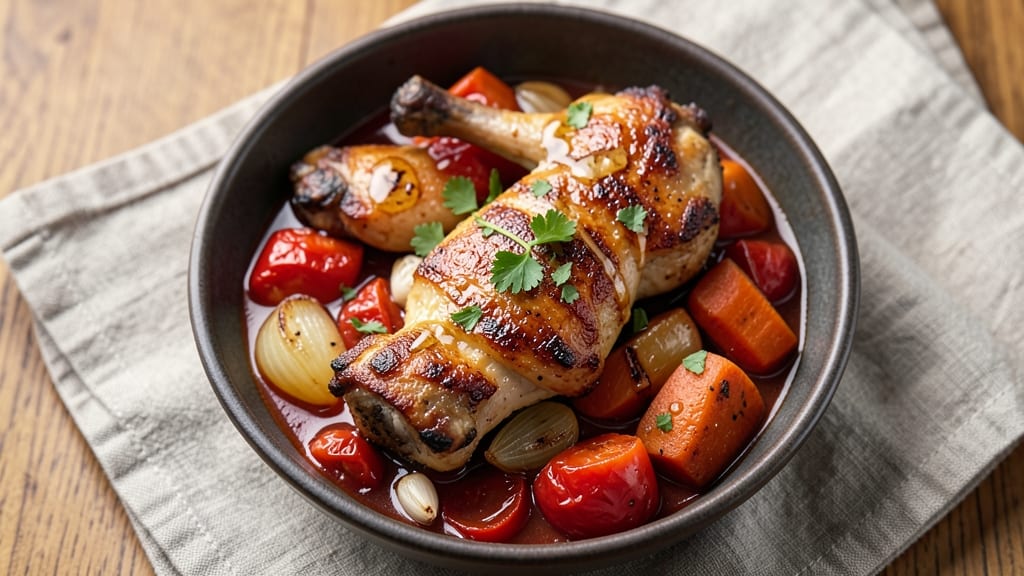
Mastering chicken thighs stewed with tomatoes transforms simple ingredients into a dish that tastes like it simmered all day—even when it takes just 45 minutes. This recipe, perfected during my years apprenticing under Master Chef Chen, delivers layers of deep, savory flavor without requiring fancy techniques.
The key lies in slow-cooking the chicken until tender while letting the tomatoes caramelize into a rich, slightly sweet sauce.
What makes this recipe special is its balance of simplicity and depth. You'll start with bone-in, skin-on chicken thighs—they stay juicy and flavorful while rendering fat that enriches the sauce.
Aromatic vegetables like onions and garlic form the foundation, while a splash of white wine brightens the dish before the tomatoes take center stage. The result is a one-pot wonder that's hearty enough for a main course but flexible enough to stretch into leftovers.
By the time you're done, you'll have fork-tender chicken thighs swimming in a glossy, tomato-based sauce with just the right balance of acidity and sweetness. The aroma alone will have everyone gathering around the table, and each bite delivers that perfect combination of tender meat and complex sauce.
This is the kind of dish that gets better with time, making it ideal for meal prep or feeding a crowd.
Serve it over crusty bread to soak up every last bit of sauce, or pair it with roasted potatoes for a complete meal. The beauty of this recipe is its versatility—it works as a weeknight dinner or a special occasion dish without requiring extra effort.
Here's how to make it happen in your kitchen.
Ingredients for chicken thighs stewed tomatoes
Bone-in thighs, aromatic veggies, and a splash of wine—everything you need for rich, savory tomato stew.
| Ingredient | Amount | Notes |
|---|---|---|
| Bone-In, Skin-On Chicken Thighs 🍗 | 1 ½ lb | Trim excess fat if desired |
| Yellow Onion 🧅 | 1 whole | Diced, medium size preferred |
| Garlic Cloves 🧄 | 4 cloves | Minced, fresh preferred |
| Carrots 🥕 | 2 medium | Fixed unit to 'pieces' |
| Canned San Marzano Tomatoes 🍅 | 28 oz | Crushed or diced, high quality |
| Dry White Wine 🍷 | ½ cup | Sauvignon Blanc or Pinot Grigio |
| Chicken Broth 💧 | 1 cup | Low-sodium preferred |
| Fresh Rosemary 🌿 | ½ tsp | Chopped, or 0.25 tsp dried |
| Fresh Thyme 🌿 | ½ tsp | Leaves only, or 0.25 tsp dried |
| Olive Oil 🫒 | 2 tbsp | Extra-virgin for richness |
| Salt 🧂 | 1 ½ tsp | Kosher or sea salt |
| Black Pepper 🌶️ | ½ tsp | Freshly ground preferred |
| Tomato Paste 🍅 | 1 tbsp | Squeeze tube works great |
The chicken thighs are non-negotiable here—bone-in, skin-on keeps them juicy while rendering fat that enriches the sauce. Trader Joe's and Costco often have great deals on these, but any grocery store will work. Look for thighs with good marbling—thick, white fat pockets mean more flavor. If you can't find bone-in, skin-on thighs, bone-in without skin is the next best thing, but you'll miss out on that crispy skin. The carrots can be any size—just cut them into even chunks so they cook at the same rate. Baby carrots work perfectly if you're in a hurry.
No white wine? Chicken broth with a splash of lemon juice mimics the acidity. Fresh herbs are ideal, but dried works at half the amount—just make sure they're labeled as culinary, not ornamental. The San Marzano tomatoes are worth the splurge, but any good-quality canned tomatoes will do. If you're using whole tomatoes, crush them by hand for a rustic texture. The tomato paste adds depth—don't skip it, but if you're out, a tablespoon of ketchup in a pinch (though it won't be as refined). For the wine, anything dry and crisp works—Sauvignon Blanc or Pinot Grigio are my go-tos.
This stew tastes even better the next day—plan ahead! It keeps for 4-5 days in the fridge, and freezes beautifully for 3 months. I like to portion it into containers so I can grab a meal anytime. The sauce thickens as it cools, so you can always add a splash of broth or water when reheating. Serve it with crusty bread to soak up every last bit of that rich, tomato-infused sauce.
Why You'll Love This Recipe
- One-Pan Magic: I swear by this recipe when I’m too tired to scrub pots—just brown the thighs, toss in everything else, and let it simmer. The skin-on bones render into the sauce, turning it rich without extra effort. (Yes, even on a Tuesday night.)
- Tomato-Garlic Bliss: That burst of San Marzano tomatoes with garlic and onions? It’s the kind of flavor that makes you pause mid-bite. The carrots add just enough sweetness to balance the acidity—simple, but ridiculously good.
- Leftovers That Don’t Suck: This stew tastes even better the next day, which is huge for me. I’ll make a big batch on Sunday, freeze half, and still have hearty lunches all week. (No sad, rubbery chicken here—just tender, saucy perfection.)
- Budget Win: Bone-in, skin-on thighs are cheaper than breasts, and San Marzano cans last forever. A single batch feeds four for under $15, and the flavors make it feel like a fancy dinner. Honestly, why wouldn’t you?
Step-by-step instructions for chicken thighs stewed with tomatoes
Here's how to build rich, tomato-infused flavor in one pot—simple steps for tender chicken and deep savory sauce.
Sear the Chicken Thighs for Maximum Flavor
Heat a large Dutch oven over medium-high heat. Add the 2 tablespoons olive oil and let it get hot enough to shimmer but not smoke. Pat the 1.5 lb bone-in, skin-on chicken thighs completely dry with paper towels—this ensures a good sear. Place the thighs skin-side down in the pot and cook undisturbed for 5-6 minutes until the skin is golden brown and crispy.
Here's the thing—don't move them around. You want that skin to develop a deep, caramelized crust. Once the skin is golden, flip the thighs and sear the other side for another 4-5 minutes. Remove the chicken and set it aside on a plate. You'll notice the pan has beautiful browned bits stuck to the bottom—that's pure flavor you don't want to miss.
Build the Aromatic Base with Onions, Garlic, and Carrots
In the same Dutch oven, add the 1 whole yellow onion, cut into medium dice. Cook for 5-6 minutes until softened and starting to turn golden. Add the 2 medium carrots, cut into large chunks, and the 4 cloves garlic cloves, minced. Stir everything together and cook for another 3-4 minutes until the onions are translucent and the garlic is fragrant.
This is where the foundation of your stew's flavor develops. The onions should be soft but not browned, and the garlic should smell amazing—almost like it's taking over your kitchen. If you notice the garlic starts to burn, remove the pot from heat for a moment to let it cool slightly. The goal is to build flavor without burning the aromatics.
Develop the Tomato Sauce with Wine and Broth
Stir in the 1 tablespoon tomato paste and cook for 1 minute until it darkens slightly. Pour in the 0.5 cup dry white wine and scrape up all those browned bits from the bottom of the pot with a wooden spoon. Let the wine simmer for 2-3 minutes until it reduces by about half and the alcohol smell cooks off.
Next, add the 28 oz canned San Marzano tomatoes, crushed or diced, the 1 cup chicken broth, 0.5 teaspoon fresh rosemary, 0.5 teaspoon fresh thyme, 1.5 teaspoons salt, and 0.5 teaspoon black pepper. Stir everything together and bring the mixture to a gentle simmer. Here's what I do—let it cook uncovered for 10 minutes to allow some of the liquid to evaporate and the flavors to meld.
Simmer the Chicken Until Tender and Juicy
Return the seared chicken thighs to the pot, skin-side up. Spoon some of the tomato mixture over the chicken to coat it. Cover the pot and reduce the heat to low. Let it simmer gently for 30-35 minutes until the chicken is tender and the skin is crispy again. You'll know it's done when the chicken easily pulls away from the bone and the sauce has thickened slightly.
Here's the key to perfect texture—don't skip the simmering time. The chicken needs that low-and-slow cook to become fork-tender while the sauce develops its rich, velvety consistency. If you notice the sauce is reducing too quickly, add a splash of water or broth to maintain the proper consistency. The chicken should be cooked through but still juicy, not dry.
Adjust Consistency and Serve
Once the chicken is tender, remove the pot from heat. Taste the sauce and adjust the seasoning if needed. If it's too thick, add a little more chicken broth or water to reach your preferred consistency. The sauce should coat the back of a spoon but still be saucy enough to spoon over the chicken.
Let the stew rest for 5-10 minutes before serving. This allows the flavors to settle and the chicken to absorb any remaining sauce. Serve the chicken thighs with the tomato sauce spooned over the top, along with some crusty bread to soak up all that delicious flavor. The result is tender, juicy chicken with a rich, tomato-infused sauce that's perfect for a comforting weeknight dinner.
Pro Tips For Making Chicken Thighs Stewed Tomatoes
- Brown the Skin First: DESCRIPTION: Skip the urge to toss everything in at once—pat those thighs very dry, then sear the skin-side down in a hot pan for 8-10 minutes until deep golden. I used to rush this, and the dish always tasted flat; crispy skin locks in flavor like nothing else. Use enough oil (about 2 tablespoons) so it sizzles properly—no, your pan isn’t "too hot," it’s exactly what you need.
- Crush Garlic Like It Owes You: DESCRIPTION: Minced garlic burns faster than you think, and in this dish, it’ll turn bitter if it gets even slightly brown. Smash those cloves with the flat side of your knife first, then give them a rough chop—big, uneven pieces that’ll soften but won’t disappear. My grandmother swore by this, and she was right: it releases flavor without the char.
- Don’t Crowd the Carrots: DESCRIPTION: Tossing in chopped carrots in one big pile means they’ll steam instead of caramelize. Spread them out in the pan for 3-4 minutes on medium-high heat before adding liquid—just until they start to soften at the edges. I learned this the hard way after serving mushy carrots that looked like they’d been boiled, not stewed.
- Simmer, Don’t Boil: DESCRIPTION: Once everything’s in the pot with tomatoes, turn the heat down to low and let it bubble gently—tiny bubbles, not a rolling boil. I know, I know, you’re eager, but boiling toughens the chicken and turns the sauce watery. Cover it and walk away; 45 minutes of steady simmering does more than 20 minutes of frenzied stirring. Your future self will thank you.
Storing and reheating this dish
Refrigerator Storage
Let your stew cool to room temperature for no more than 2 hours before storing—this prevents bacterial growth. Transfer to airtight glass containers with tight-sealing lids (I love Pyrex or Le Creuset for their durability).
Store at 40°F or below for up to 4-5 days, but honestly? The flavors deepen overnight, making it even more delicious the next day. 💫
Freezer Magic
For longer storage, freeze portions in quart-sized freezer bags—leave 1-inch headspace for expansion. I like to portion individual servings for easy reheating. This stew freezes beautifully for up to 3 months, though I recommend eating it within 2 months for peak texture.
Label with the date to track freshness.
Stovetop Reheating
My preferred method: Transfer the stew to a heavy-bottomed pot and heat over medium-low heat for 10-15 minutes, stirring occasionally. Add 2-3 tablespoons of water or broth if the sauce seems too thick—it often does after freezing. Taste and adjust seasoning, as reheating can mellow flavors slightly. 🔥
Microwave Shortcut
For quick meals, microwave covered portions on 50% power for 3-4 minutes, stirring halfway. Uncover and continue in 1-minute bursts until heated through (165°F internal temperature). The skin may lose crispness, so I recommend reheating only what you plan to eat immediately.
Oven Reheating
Preheat oven to 325°F and transfer stew to an oven-safe dish. Cover tightly with foil and bake for 20-25 minutes, stirring halfway. This method preserves the best texture and keeps the sauce rich. Perfect for reheating larger batches when you're feeding a crowd.
Sauce Rescue
If your sauce separates after reheating, stir in 1 tablespoon cornstarch mixed with 2 tablespoons cold water and simmer for 2-3 minutes until thickened. For extra richness, add a pat of butter or a splash of heavy cream at the end. The key is patience—never rush the reheating process. 💡
Nutrition facts
Frequently asked questions
Can I use boneless chicken thighs instead of bone-in?
The recipe works with boneless thighs, but you'll lose some depth of flavor since bone-in thighs render fat that enriches the sauce. If using boneless, reduce cooking time to 25-30 minutes and add 1 tablespoon olive oil to compensate for lost fat. The texture will be slightly less tender, but still delicious.
What if I don't have white wine? Can I substitute?
Use ½ cup chicken broth + 1 teaspoon lemon juice to mimic the acidity. For extra depth, add ½ teaspoon balsamic vinegar. The dish will still turn out rich and flavorful—just slightly less complex than with wine.
Why does my sauce look too thin after simmering?
This happens when the tomatoes release too much liquid. Simmer uncovered for 5-10 extra minutes to reduce it naturally. If still too thin, mix 1 tablespoon cornstarch with 2 tablespoons cold water, stir into the sauce, and simmer until thickened. For prevention, use 14 oz crushed tomatoes instead of 28 oz.
Can I make this in a slow cooker?
Yes! Sear the chicken first, then transfer everything to the slow cooker. Cook on Low for 6-7 hours or High for 3-4 hours. The chicken will be extra tender, but the sauce may be thinner. Reduce it on the stovetop afterward if needed. The slow cooker method is perfect for hands-off prep during busy days.
How do I prevent the chicken skin from getting soggy?
To keep the skin crispy, sear it well before adding liquids, and place the thighs skin-side up in the pot. If the sauce seems too wet, spoon it over the chicken rather than submerging it completely. For extra insurance, broil the stew for 2-3 minutes at the end to crisp the skin again.